British Columbia — Mountains, Ocean, Rainforest
Capital: Victoria · Population: approximately 5.6 million · Joined Confederation: 1871
British Columbians sometimes joke that BC isn't really a province — it's five or six regions sharing a postcode. The joke has weight. Vancouver is a Pacific Rim city that turns its attention outward toward Seattle, Los Angeles, Tokyo and Shanghai more than toward Toronto or Ottawa. Victoria, on Vancouver Island, is gentler, greener and slower. The Okanagan Valley is wine country with hot summers. The Kootenays, in the southeast, are old mining towns reinvented as yoga retreats. The North is vast, young, and heavily resource-based. If you think of British Columbia as one place, you'll miss most of it.
A Compact History
BC is unusual in Canadian history: it was populated by Indigenous peoples for at least 10,000 years, visited by Spanish and British explorers in the 1770s, claimed by Britain after the Oregon Treaty of 1846, developed primarily during the Fraser River gold rush of 1858, and joined Confederation in 1871 on the promise that a railway would be built to connect it to the rest of the country. That railway — the Canadian Pacific — was finished in 1885 and remains one of the great engineering stories of the 19th century.
The post-war history is a story of waves: a forestry and fishing economy in the 20th century, a Hong Kong migration wave in the 1990s, a tech-and-film boom layered on top of the old resource economy since 2010. The Indigenous history of BC is particularly important to understand because, unlike most of the rest of Canada, almost no historic treaties were signed. The legal status of most of the land is still being worked out through court decisions and modern treaty negotiations.
Vancouver
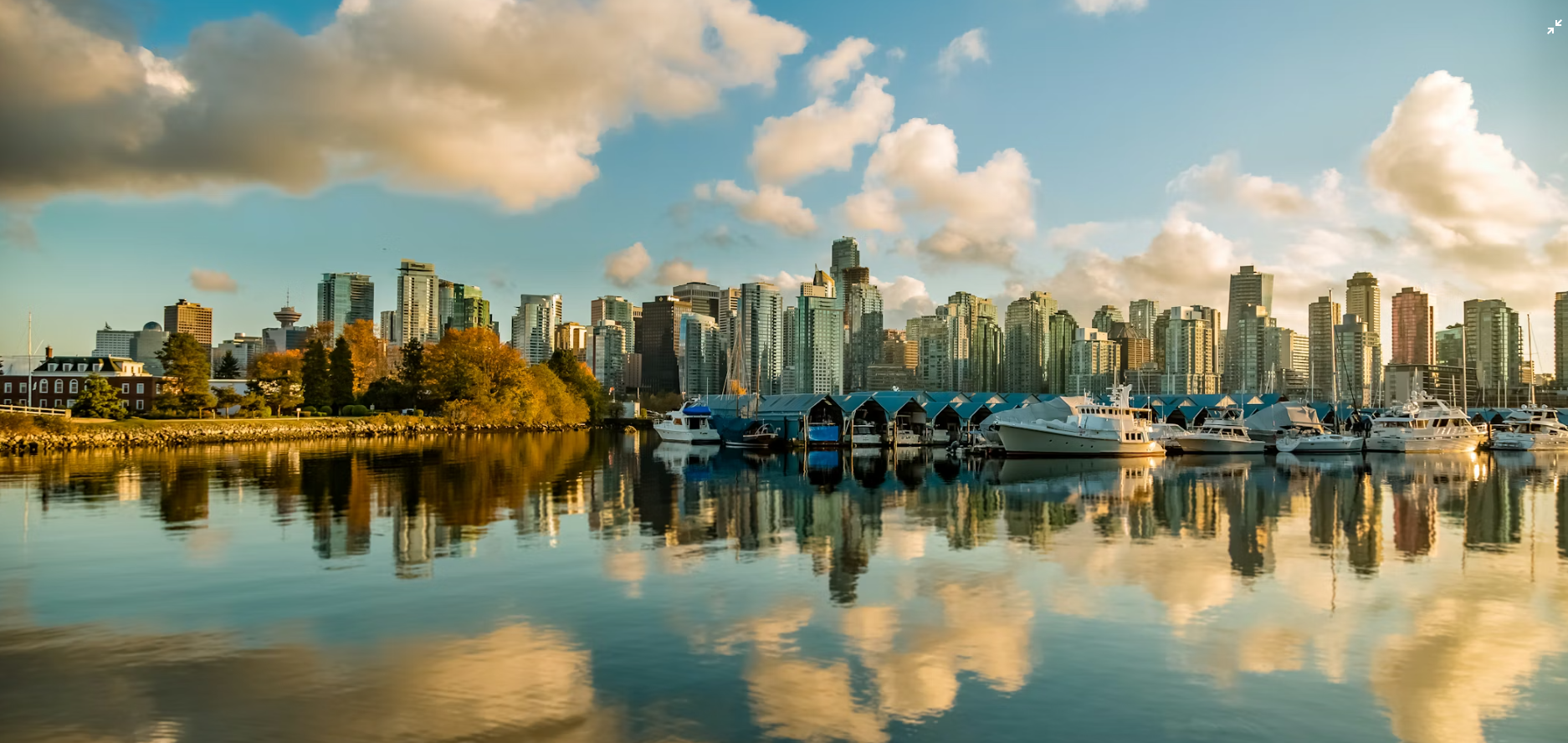
Vancouver is BC's largest city and Canada's third-largest metropolitan area (about 2.8 million in the metro region). It sits on a peninsula between the Burrard Inlet and the Fraser River, with the North Shore mountains rising almost straight out of the harbour. On a clear day it's one of the most dramatically sited cities on Earth.
Is Vancouver as rainy as people say?
In winter, yes. From late October through February, the city receives more than 150 mm of rain per month — roughly double what Seattle gets, despite Seattle's reputation. Summers, by contrast, are startlingly dry: July and August average less than 40 mm of rain per month, with long stretches of sunny, low-humidity weather in the low 20s°C. The "rainy Vancouver" stereotype is a winter stereotype.
What are the best Vancouver neighbourhoods to explore?
The West End, a dense residential neighbourhood between downtown and Stanley Park, is the easiest place for a visitor to spend time: walkable, low-traffic, on the seawall. Gastown, the original 1880s core, has survived its own tourist boom and is now a reasonable place to drink and eat. Chinatown, just east of Gastown, is one of the largest on the continent and has been slowly reviving after a difficult decade. The Downtown Eastside, between Gastown and Chinatown along Hastings Street, has the most visible concentration of homelessness and drug use in the country; it's not dangerous to walk through but it's distressing.
Outside downtown, Kitsilano ("Kits") is the beach-and-yoga neighbourhood on the south side of English Bay. Main Street in South Vancouver is where the independent restaurants have been migrating for fifteen years. Commercial Drive ("The Drive") is the old Italian neighbourhood that became the lefty-bohemian neighbourhood and is now somewhere in between. Richmond, just south of the city, has one of the largest and best Chinese food scenes outside Asia.
How expensive is Vancouver?
At least as expensive as Toronto, often more so. A one-bedroom apartment in the West End rents for CAD $2,400 to $2,900 per month in early 2026. The benchmark detached house in the city of Vancouver is above CAD $2 million. Groceries, transit, and restaurants are broadly in line with Toronto. The 12 percent combined PST/GST applies at most retail purchases.
Do I need a car in Vancouver?
No, not for the downtown and immediately adjacent neighbourhoods. The SkyTrain is fast, clean, and reaches the airport and Richmond. The bus network is dense. If you're heading to Whistler, the Sunshine Coast, or up the Fraser Valley, a car makes things simpler; renting for a day or two is fine.
Is Stanley Park worth the hype?
Yes. It's 400 hectares of largely intact old-growth rainforest (some trees are more than 500 years old), bordered by a 10-kilometre seawall that loops the whole park. You can walk it, run it, or rent a bike from the rental shops at the entrance. Allow three hours to cycle around it and stop at the lighthouse and the collection of totem poles (the most-photographed tourist attraction in BC, by some measures).
What about the Capilano Suspension Bridge?
It's a reasonable experience but it costs about CAD $75 per adult and the crowds are real. If you want a similar experience for free, the Lynn Canyon Suspension Bridge is a 10-minute drive further east, it's 20 metres shorter, and it's in a better canyon. Locals send visitors to Lynn Canyon when the visitors are smart enough to ask first.
Is Vancouver really a "No Fun City"?
That's a local joke about a pattern of restrictive liquor licensing, early nightclub closures, and a planning culture that doesn't love patios or street festivals. It's been easing since the mid-2010s. The city has a real food scene now, a strong craft beer scene, and a lively summer festival calendar, but it's still not Montreal or New Orleans.
Most Popular Museum: UBC Museum of Anthropology
The UBC Museum of Anthropology (MOA), designed by Arthur Erickson in 1976, is by any measure one of the finest museum buildings in the world and one of the most important Northwest Coast Indigenous art collections anywhere. The Great Hall rises 14 metres under slanted glass walls, framing the outdoor landscape through which Haida, Tlingit, Tsimshian, and Kwakwaka'wakw totem poles appear to grow from the forest floor. The Bill Reid Rotunda houses Reid's Raven and the First Men sculpture — a white gold-flecked clamshell from which the first Haida people emerge — in a space calibrated to make you feel small in the right way.
The Multiversity Galleries hold more than 10,000 objects in open storage, accessible to researchers and the public in a storage-as-exhibition format that turns the conventional museum model inside out. The museum works actively with Indigenous communities on repatriation and curation, meaning the interpretation is alive in a way that static colonial-era museum labels cannot be. Admission is $23 for adults; Tuesday evenings are by donation.
Your Best 5 Days in Vancouver
Vancouver is the city you already think it is — mountains, ocean, Stanley Park, suspiciously good sushi — plus a neighbourhood texture that takes a few days to find. Don't spend all five days on the seawall. Get into Chinatown, Commercial Drive, Main Street, and the North Shore, and you'll leave with a more complicated and more accurate picture of what the city actually is.
Stanley Park & the Seawall
Start with coffee at Revolver on Cambie, then walk or bike the full 8.8-km Stanley Park seawall — counter-clockwise from the Coal Harbour end to get the best light on the mountains. Stop at the Brockton Point totem poles, the Girl in a Wetsuit sculpture, and the Prospect Point lookout over the Lions Gate Bridge. Lunch at the Prospect Point Café. Afternoon in the West End on Denman Street. Dinner at the Cardero's waterfront patio.
Gastown, Chinatown & Main Street
Walk Gastown's cobblestone streets and photograph the steam clock on Water Street. Then continue east into Chinatown — one of the oldest and most architecturally intact in North America. The Chinatown Night Market (summer weekends) is the best outdoor food event in the city. Afternoon south on Main Street: the shops between 20th and 30th Avenues are the city's best independent retail strip. Dinner at Burdock & Co on Main, one of the city's most thoughtful seasonal menus.
UBC & the Museum of Anthropology
Drive or take the 99 B-Line to UBC and spend the morning at the Museum of Anthropology. Afternoon: walk the UBC botanical garden and Nitobe Memorial Garden (the finest Japanese garden outside Japan in North America). Take the ferry from Horseshoe Bay to Bowen Island for a one-hour afternoon excursion if time allows, or return via the seawall through Kitsilano.
North Shore — Grouse, Capilano & Lynn Canyon
Take the SeaBus to Lonsdale and walk up to the Capilano Suspension Bridge (expensive but stunning, or visit the adjacent Cleveland Dam and canyon for free). Hike Grouse Grind (2.9 km, 853 m gain — punishing, iconic, not for the unprepared) or take the gondola up and walk the mountain. Lynn Canyon Park offers a free suspension bridge and trail network that matches Capilano for scenery. Dinner in North Vancouver at Burgoo Bistro or the Lobby Lounge at the Lonsdale Quay Hotel.
Granville Island & Commercial Drive
Morning at Granville Island Public Market — don't just walk through, stop and eat. The Stuart's Bakery pastel de nata and the Oyama Sausage and Cheese at the market are the correct breakfast. Afternoon on Commercial Drive (the Drive): an Italian-Latin neighbourhood that hosts the city's most relaxed café culture. Evening flight from YVR — allow 90 minutes; the international terminal is efficient but the security queues move slowly in summer.
Victoria
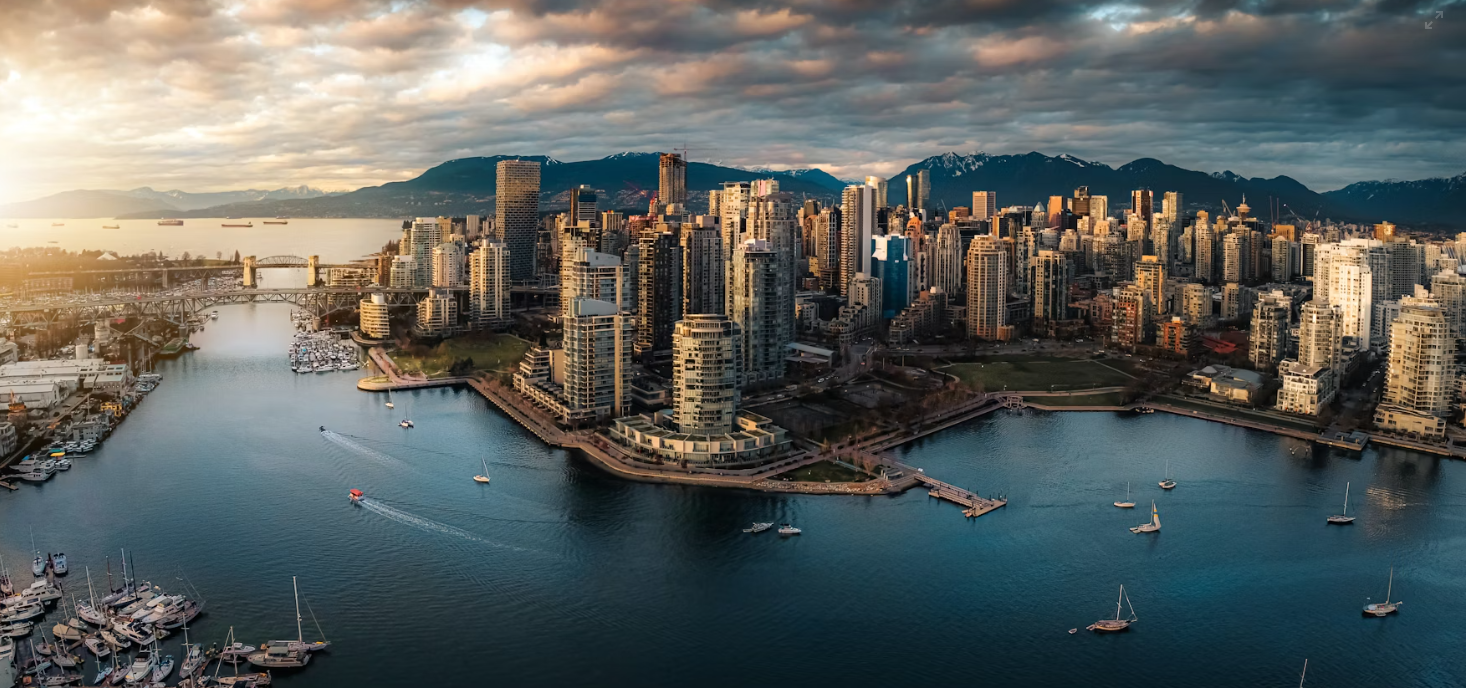
Victoria is BC's capital, on the southern tip of Vancouver Island. Population is about 397,000 in the metro area — smaller than most visitors expect. It's a ferry ride or a float-plane flight from Vancouver (1 hour 35 minutes on BC Ferries plus the drive; 35 minutes in the air from harbour to harbour).
Why is the capital on an island?
Historical accident. Victoria was the capital of the British colony of Vancouver Island before BC joined Confederation in 1871, and the capital simply stayed there. By the 1890s it was clear that the mainland would outgrow the island, but by then the provincial legislature had built its permanent home on the Inner Harbour and the move would have been politically impossible.
What's Victoria known for?
Gardens, tea, and retirees. Butchart Gardens, 20 minutes north of the city, is a genuinely impressive set of formal gardens built in an old limestone quarry. Afternoon tea at the Empress Hotel has been running since 1908. The downtown is walkable, the climate is the mildest in Canada (Victoria averages fewer than 10 days below freezing a year), and for a long time it was the most-retired city in the country. That's changed — the tech sector, especially at the University of Victoria, has pulled down the average age significantly since 2010.
Is Victoria worth visiting on its own?
For one or two days as part of a Vancouver Island trip, yes. For a full week, not really — you'd want to get out to Tofino on the west coast, or up the island to Campbell River, or hike the West Coast Trail. Victoria is a charming gateway, not a destination in itself.
Most Popular Museum: Royal BC Museum
The Royal BC Museum is the most visited museum in British Columbia and one of the most significant cultural institutions in the country. The First Peoples Gallery — a collaboration between the museum and dozens of BC First Nations — is the reason to come first: masks, regalia, carved posts, woven baskets, and oral history recordings that present the civilizations of the BC coast in their own terms, not as ethnographic objects for settler categorization. The Natural History galleries, with their recreated ice-age diorama and full-scale woolly mammoth, occupy an enormous hall designed to make you feel the scale of deep time.
The museum is currently undergoing a major transformation — a new facility is planned that will further centre First Nations voices in the institution's programming and design. Check current gallery hours and any temporary closure information before visiting, as portions of the collection may be in transition during the museum's renewal period.
Your Best 5 Days in Victoria
Victoria is the city that mainlanders condescend to — "a bit sleepy," they say, "a bit British" — until they spend a weekend there and realize the Inner Harbour at dusk, the Butchart Gardens in full bloom, and the Beacon Hill Park afternoon with deer wandering among the flower beds produce a quality of life that is genuinely hard to criticize. Five days is enough to cover the museums, the gardens, the cycling trails, and a day trip to the Saanich Peninsula.
Inner Harbour & Royal BC Museum
Arrive by BC Ferry from Tsawwassen (book vehicle space in advance) or fly into YYJ. Walk the Inner Harbour promenade past the Parliament Buildings and Fairmont Empress. Afternoon at the Royal BC Museum — allow four hours for the First Peoples Gallery and Natural History sections. Dinner at Fishook on Cook Street for BC halibut and Pacific Rim-influenced cooking.
Beacon Hill Park & Cook Street Village
Morning in Beacon Hill Park — 200 acres of English gardens, natural Garry oak meadows, a children's petting zoo, and ocean views from the southern bluffs. The park's totem pole is one of the tallest in the world. Lunch on Cook Street Village (the local equivalent of Robson Street but walkable and relaxed). Afternoon at the Victoria Bug Zoo and a walk through the Old Town.
Butchart Gardens
The Butchart Gardens, 21 km north of Victoria, were begun in 1904 by Jennie Butchart in a worked-out limestone quarry on her husband's property, and over a century have grown into 55 acres of themed gardens — the Sunken Garden, the Italian Garden, the Japanese Garden — that are stunning from May through September. Go for the Saturday night fireworks show in summer. Allow half a day minimum; a full day if you're a gardener.
Saanich Peninsula & Whale Watching
Drive north through the Saanich Peninsula — the Gulf Islands visible across Satellite Channel, lavender farms and produce stands along the road. Catch a whale watching tour from the Inner Harbour (resident orca pods are frequently spotted May through October; humpback whales have returned in recent years). If orcas don't appear, minke whales, Steller sea lions, and harbour porpoises usually will.
Cycling the Galloping Goose & Departure
Rent a bike and ride the Galloping Goose Trail west from the Johnson Street Bridge — a converted rail corridor that runs through Esquimalt, View Royal, and into the Highlands. Thirty kilometres in and you're in pastoral countryside with no traffic and morning light through the Garry oak canopy. Return by noon, lunch at 10 Acres Kitchen on Fort Street, and catch the afternoon ferry or flight.
Whistler
Whistler is a mountain town about 120 km north of Vancouver on the Sea-to-Sky Highway, population about 14,000 but a peak-season visitor load that pushes the functioning population above 50,000. It's North America's largest ski resort by skiable terrain.
When should I go to Whistler?
Depends what you want. Ski season runs late November to mid-April, with reliable snow from January on. The Peak 2 Peak gondola between Whistler and Blackcomb is in operation. Summer (June through September) is the underrated season — hiking, mountain biking in the Whistler Mountain Bike Park (one of the best in the world), and a weather pattern that's often drier and warmer than Vancouver's. Avoid late April to early June and late October to mid-November; the resort is in shoulder-season shutdown.
Is Whistler expensive?
Yes. Lift tickets run CAD $150-$200 per day in the peak season; a two-bedroom condo for a week in February runs CAD $3,000 and up. Most people who ski here regularly buy an Epic Pass or an Ikon Pass in spring for the following winter, which brings the day cost down dramatically.
Can I do Whistler as a day trip from Vancouver?
Yes. The Sea-to-Sky Highway is one of the most scenic drives in Canada (allow 2 hours each way). Coach services run every couple of hours. If you're only going once, staying overnight is worth it for a dinner in the village, but a day trip works.
Most Popular Museum: Squamish Lil'wat Cultural Centre
The Squamish Lil'wat Cultural Centre in Whistler Village is the most important cultural institution in the Sea-to-Sky corridor — a collaboration between the Squamish Nation and the Lil'wat Nation, the two peoples on whose traditional territories Whistler Resort sits, built to preserve, present, and celebrate their distinct but adjacent cultures. The building itself — a cedar and stone longhouse-style structure — is an architectural accomplishment that won awards on its completion in 2008. Inside, the permanent collection includes woven baskets, carved wooden objects, ceremonial regalia, and photographic archives that cover both nations' histories from before European contact through the 20th century.
The centre hosts cultural programming, beading and carving demonstrations, and guided tours that go well beyond the object-in-a-case museum experience. The canoe on permanent display — a Squamish Nation traditional dugout cedar canoe — and the Lil'wat earthen pit house (a semi-subterranean winter dwelling) that can be entered from the main gallery floor are particular highlights. It is one of the best places in the province to understand the Pacific Northwest Coast and Plateau Indigenous traditions simultaneously.
Your Best 5 Days in Whistler
Whistler earns its reputation in both summer and winter, and choosing between them is almost entirely a matter of what you want from your body. Winter is for skiing and snowboarding on the two connected mountains (Whistler and Blackcomb) with 8,171 acres of skiable terrain — the largest ski resort in North America. Summer is for mountain biking, hiking, and enjoying what turns out to be a genuinely appealing village at an agreeable altitude.
Village & Squamish Lil'wat Cultural Centre
Drive or take BC Transit from Vancouver (2.5 hours). Walk the pedestrian village, rent bikes for the afternoon, and visit the Squamish Lil'wat Cultural Centre in the afternoon. Dinner at Araxi Restaurant — the most consistently excellent restaurant in the resort, known for its BC wine list and seasonal tasting menus.
Mountain Biking or Skiing (Season-Dependent)
Winter: ski or snowboard Whistler Mountain (the Harmony Ridge and Symphony Bowl for intermediate and expert terrain respectively). The PEAK 2 PEAK Gondola to Blackcomb is the highest and longest unsupported lift span in the world — 436 metres above the valley floor. Summer: the Whistler Mountain Bike Park (top-rated in the world by many metrics) has trails from beginner to terrifying expert. The Fitzsimmons and Boneyard trails are the accessible classics.
Garibaldi Provincial Park Day Hike
Drive 40 minutes south on the Sea-to-Sky to the Diamond Head trailhead (40 km from Squamish). The 10.5-km hike to Elfin Lakes passes through old-growth forest and opens onto a volcanic plateau with views of the Garibaldi massif. The Garibaldi Lake hike from the Rubble Creek trailhead (18 km return, 820 m gain) is the most spectacular day hike in the Lower Mainland — an impossibly turquoise glacial lake in a volcanic cirque.
Pemberton & the Lillooet River Valley
Drive 35 km north over Pemberton Meadows — seed potato farms in one of the most fertile and scenically dramatic agricultural valleys in BC. The Sea-to-Sky Gondola in Squamish (on the way back) provides a quick ride to a viewpoint over Howe Sound that makes the Sky Pilot Mountain summit route accessible without technical climbing. Dinner at the Pemberton Brewing Company.
Brandywine Falls & Sea-to-Sky Drive Home
Brandywine Falls Provincial Park (15 minutes south of Whistler) has a 70-metre waterfall visible from a five-minute walk from the parking lot. Callaghan Valley, 10 km south, is the site of the Olympic and Paralympic cross-country venue from 2010 — accessible in summer for hiking the Journeyman Route and in winter as a backcountry ski and snowshoe destination. Drive the Sea-to-Sky back to Vancouver via Squamish — stop at the Chief parking area and look up.
The Okanagan (Kelowna & Penticton)
The Okanagan is a 200-kilometre-long valley of lakes in the BC interior, about five hours' drive from Vancouver. It's the main wine region in western Canada (about 200 wineries, centred between Osoyoos in the south and Vernon in the north), the hottest summer destination in the province (daily highs regularly above 32°C in July and August), and increasingly a retirement magnet.
What should I actually do in the Okanagan?
Drive the wineries. Swim in Okanagan Lake. Eat the stone fruit — peaches, cherries, apricots — that comes off the orchards from mid-July through August. Hike in one of the provincial parks (Cathedral, Skaha Bluffs). Go to the Penticton Peach Festival in August if you like small-town festivals. Stay away in August if you don't like wildfire smoke; since 2018 the Okanagan has lost entire summers to smoke drift from nearby fires, and it's likely to keep happening.
Most Popular Museum: Kelowna Museums
The Kelowna Museums Society operates the Okanagan Heritage Museum on Queensway Avenue, which covers 10,000 years of the Okanagan from the Syilx (Okanagan) First Nations through the fur trade, the early orchardists who planted the first fruit trees in the valley, and the late 19th-century missionaries and settlement waves that transformed the lakeside economy. The geological gallery explaining how the Okanagan Valley was carved — by repeated glaciations that scoured the lake basin to its present depth of 230 metres — is the best single explanation of why the valley's climate is as warm and dry as it is, and therefore why wine grapes grow here.
The BC Wine Museum & VQA Wine Shop in Kelowna's Cultural District is smaller but equally relevant to the Okanagan's modern identity — rotating exhibits on the history of the local wine industry from the first Russian Concord hybrids to the premium Bordeaux varietals that now earn international recognition, plus a VQA tasting room stocked with the best current local production.
Your Best 5 Days in the Okanagan
The Okanagan runs 250 km from the TransCanada junction at Sicamous to Osoyoos on the US border, and a five-day visit should use a car and move around rather than anchoring in Kelowna. The north end is apple and cherry orchards and small resorts; the south is the driest, hottest climate in Canada and Canada's most concentrated wine country.
Kelowna: Waterfront & Wine Museum
Arrive via YLW airport or drive the Coquihalla. Walk the Kelowna waterfront from City Park to the Cultural District. Afternoon at the Okanagan Heritage Museum and BC Wine Museum. Evening on the restaurant row along Ellis Street — Waterfront Wines and Sunny's Modern Diner are the anchors of a block that has been Kelowna's best eating for years.
Naramata Bench Wine Trail
Drive south to Penticton and take the Naramata Road onto the Bench — 35 wineries in 15 km of gravel and pavement above Okanagan Lake. This is where Mission Hill, Poplar Grove, Laughing Stock, and forty other producers grow Merlot, Pinot Gris, and Chardonnay at a quality that surprises European visitors who expected less. Picnic lunch with charcuterie from the Penticton Farmers Market at the Munson Mountain viewpoint.
South Okanagan: Osoyoos & Oliver
Drive to Osoyoos, Canada's warmest and driest town, on Canada's only true (if small) desert — the Okanagan Desert Centre has a cactus-and-sage ecosystem that genuinely feels like Arizona. The Nk'Mip (Inkameep) Desert Cultural Centre, operated by the Osoyoos Indian Band, is the country's first Indigenous-owned and operated desert interpretive centre and one of the most thoughtfully designed in BC. Evening dinner at the Sonora Room at Burrowing Owl Estate Winery.
Kettle Valley Rail Trail
The Kettle Valley Railway was one of the great engineering achievements of early 20th-century BC; the tunnel-and-trestle sections near Myra Canyon, east of Kelowna, are now a cycling trail with 18 restored wooden trestles across a canyon that drops 600 metres to the valley floor. Rent bikes in Kelowna and drive to the trailhead; the 12-km Myra Canyon section is manageable as a half-day, and the views are extraordinary.
Summerland & Peachland
Drive north through Summerland (the Summerland Ornamental Gardens are a quiet stop) and Peachland to reach some of the lake's best beach access. The Giant's Head Mountain trail in Summerland (4.5 km, 350 m gain) has a 360-degree summit view over Okanagan Lake and the three mountain ranges that contain the valley. Lunch at Peachland's beachside café, then drive the Connector back to Vancouver or north toward Kamloops.
Prince George & the North
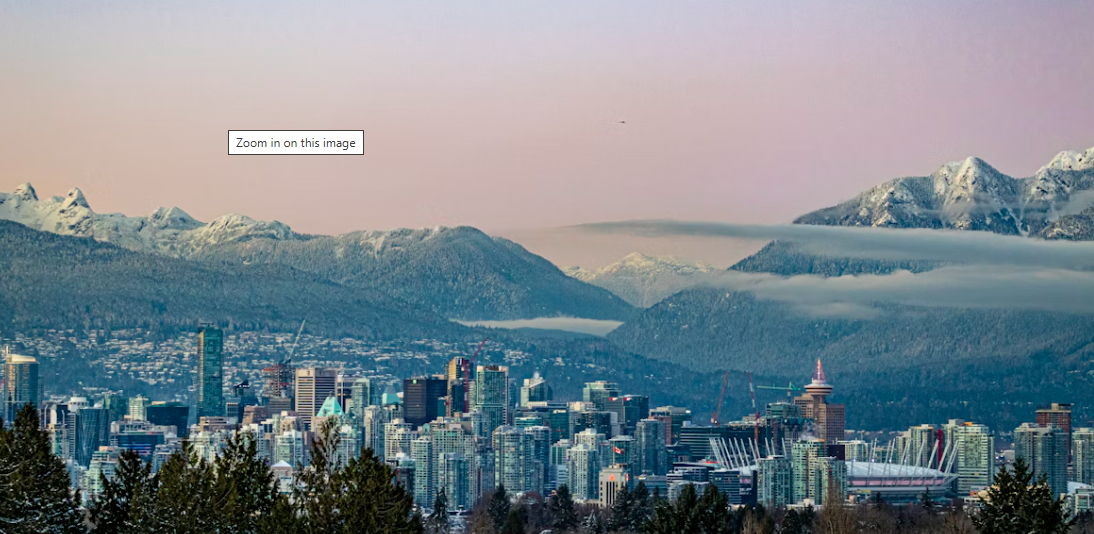
Prince George, at the geographic centre of the province, is the largest city in northern BC (about 80,000 people). It's a forestry, rail and university town, and the gateway to everything north of it: the Cariboo, the Nechako plateau, the Rocky Mountain foothills, and the long drive up Highway 16 (the Yellowhead) or Highway 97 (towards the Yukon).
Further north, Prince Rupert is the port city at the terminus of the Yellowhead Highway, a nine-hour drive from Prince George through some of the most spectacular river country in the country. Ferries leave from here for Haida Gwaii and for the Alaska Marine Highway. It's a serious trip even now, and that's part of its appeal.
Most Popular Museum: Prince George Regional Museum
The Prince George Regional Museum (now operating as Exploration Place) is the largest museum between Edmonton and the BC coast, covering the natural history of BC's central interior — the geology, the river systems, the boreal and sub-alpine ecosystems — and the human history of the region from the Carrier Sekani and Lheidli T'enneh First Nations through the fur trade era and into the Nechako River valley settlement and the forestry economy that has dominated the region's economy since the 1950s. The children's science galleries and the outdoor interpretive exhibits along the Heritage River Trail provide context for the city's striking location at the confluence of the Fraser and Nechako rivers.
Your Best 5 Days in Northern BC
Northern BC rewards the kind of traveller who is genuinely interested in wilderness, rivers, First Nations culture, and landscapes where you can drive 200 km between gas stations. It's not a five-star destination but it is a genuine one, and the road network — the Alaska Highway, the Yellowhead, the Cassiar — covers some of the most beautiful and least-visited country on the continent.
Prince George: Exploration Place & Heritage River Trail
Base yourself in Prince George. Morning at Exploration Place — give the natural history galleries and the Heritage River Trail two to three hours. Afternoon: walk the confluence of the Fraser and Nechako from Cottonwood Island Park. Evening at Twisted Cork Restaurant and bar on George Street.
Bowron Lake Provincial Park
Drive 120 km east to Bowron Lake — the entrance to one of the world's great canoe circuits, a 116-km chain of lakes and rivers that takes 7–10 days to paddle completely. Day visitors can paddle the first lake and portage to Kibbee Lake for a glimpse of what the full circuit involves. The park's wildlife — moose, osprey, grizzly on the river edges — is the main draw.
Barkerville Historic Town
Barkerville, 90 km east of Quesnel on Highway 26, is BC's gold rush heritage site — a fully reconstructed 1860s gold rush town in the Cariboo gold fields where 100,000 prospectors arrived in 1862. Costumed interpreters, working bakeries and blacksmiths, and guided tours of the Richfield Courthouse (where Judge Matthew Baillie Begbie kept order) make this the most complete living history experience in western Canada.
Yellowhead Drive West to Smithers
Drive the Yellowhead Highway west from Prince George through Vanderhoof — where the First Nations of the Carrier Sekani have fishing camps along the Nechako — to Burns Lake and Smithers, beneath the glacier-capped Babine Range. The Bulkley Valley around Smithers is one of the finest steelhead rivers in the world (September–November fishing season), and the alpine meadows above the townsite on Hudson Bay Mountain are as beautiful as anything in the South.
Haida Gwaii Gateway or Return
From Smithers or Prince Rupert, BC Ferries runs the MV Northern Adventure to Haida Gwaii (sailing time 6–8 hours). If the ferry doesn't fit the schedule, drive north on Highway 16 to Kitwanga and the start of the Cassiar Highway — the 700-km route north to Watson Lake in the Yukon that passes through some of the emptiest and most dramatic landscape in the province. Return to Prince George via the same Yellowhead route.
Tofino & the West Coast
Tofino is a small town of about 2,500 on the Pacific side of Vancouver Island, roughly a four-hour drive from Victoria. It's known for cold-water surfing (wetsuit required year-round), the long sweep of Long Beach, and storm-watching in winter when Pacific storms hit the coast with genuine force. The Wickaninnish Inn popularized winter storm-watching in the 1990s; the weather is the attraction. Reservations are required for almost everything in summer, and should be made three to six months in advance.
Most Popular Museum: Tofino Botanical Gardens & WCWC
Tofino's museum culture is less about buildings and more about immersive interpretation of living landscapes. The Tofino Botanical Gardens — five acres of temperate rainforest garden beside MacKenzie Beach — is managed by the Tofino Botanical Gardens Foundation and serves as both a garden and a living reference for the coastal Douglas fir, Sitka spruce, red cedar, and tidal ecosystems of Clayoquot Sound. The interpretive programme connects visitors to the ecology of the sound in ways that the beach experience alone doesn't.
The Rainforest Education Society and the Pacific Rim Whale Festival (March) offer seasonal interpretation of the grey whale migration, the most accessible whale watching event in Canada. For the history of Clayoquot Sound — the protests, the old-growth logging conflict of 1993 that became the largest act of civil disobedience in Canadian history, the eventual UNESCO Biosphere Reserve designation — the Long Beach Unit of Pacific Rim National Park's visitor centre on Highway 4 provides the most thorough and balanced account.
Your Best 5 Days in Tofino
Tofino occupies a narrow peninsula at the end of a highway that takes three to four hours from Victoria through mountains and past old-growth forests. The journey — and the fact that there's only one road in and out — is part of what makes it feel different from other coastal resorts. You come here deliberately, and you stay because the surf, the old-growth trails, the food, and the light conspire to keep you.
Arrival & Long Beach
Drive from Victoria via Port Alberni (lunch at the Swale Rock Café) and arrive by mid-afternoon. Walk Long Beach — 16 km of unbroken sand backed by old-growth forest and the open Pacific — and understand immediately why this was worth driving to. Sunset at the beach with chips from Rhino Coffee and a beer from Tofino Brewing Company. First night's dinner at Shelter Restaurant on Campbell Street.
Surfing & Botanical Gardens
Book a morning surf lesson with Pacific Surf School (Chesterman Beach is the best learner beach; it's not too powerful for beginners most of the year). Afternoon at the Tofino Botanical Gardens and a walk along the MacKenzie Beach forest path. Dinner at Wolf in the Fog — Tofino's most celebrated restaurant, where chef Nick Nutting has built a menu around wild BC ingredients that wins award nominations every year.
Meares Island Big Tree Trail
Take the water taxi from Town Docks to Meares Island (15 minutes). The Big Tree Trail (4 km loop) passes through an old-growth forest of red cedar, Sitka spruce, and western hemlock that includes individual trees over 1,000 years old. The Hanging Garden Tree — a cedar with the circumference of a small house — is the single most impressive tree I've stood beside in BC. Kayak back if you're paddling; water taxi return if you're not.
Hot Springs Cove
Book a water taxi or floatplane to Hot Springs Cove (Maquinna Marine Provincial Park) — a 45-minute boat ride north through Clayoquot Sound, passing sea otters, harbour seals, and humpback whales if you're lucky. The geothermal pools at the cove — a series of rock pools fed by 50°C spring water, cooled to usable temperature by the ocean — are reached by a 2-km boardwalk through old-growth forest. This is the most remote and rewarding half-day excursion on Vancouver Island.
Cox Bay & Departure
Cox Bay at sunrise. This is the surf beach that built Tofino's global reputation — consistent point and beach break with a left-hand wave that draws experienced surfers from around the world. Even non-surfers can sit on the logs and watch the swell come in from the open Pacific for an hour and leave feeling like they've been somewhere real. Drive back through Port Alberni and catch the late afternoon ferry or Harbour Air floatplane from the Tofino dock to Vancouver.
British Columbia FAQs
How do I get from Vancouver to Victoria?
Three options. BC Ferries runs about every hour from Tsawwassen (45 minutes from downtown Vancouver) to Swartz Bay (30 minutes from Victoria); the sailing is 1 hour 35 minutes and the whole door-to-door trip is about four hours. Harbour Air runs float planes from the Vancouver Harbour to Victoria Harbour in 35 minutes. Helijet runs helicopters on a similar route. For a first-time visitor, take the ferry once — the route through Active Pass is genuinely beautiful.
What's PST in British Columbia?
7 percent Provincial Sales Tax, on top of 5 percent federal GST, for a combined 12 percent. It applies to most retail goods but not to most groceries or restaurant meals (restaurant meals are GST-only at 5 percent). Hotel rooms carry additional municipal and tourism levies, bringing the total on a hotel bill to around 15 to 17 percent depending on the city.
Is cannabis legal in BC?
Yes, it's federally legal across Canada since October 2018 and sold through provincial retailers (BC Cannabis Stores) and licensed private stores. Age limit is 19 in BC. Public consumption rules are similar to smoking tobacco: not within six metres of a doorway, not in parks where tobacco is also banned, not on school grounds.
Are there bears in BC cities?
Sometimes. Vancouver itself almost never; the suburbs of North Vancouver, West Vancouver and Coquitlam regularly. Whistler, yes. Any trash can left out the night before pickup is a potential bear attractant, which is why there are strict garbage rules in mountain towns. Carry bear spray on trails outside the Lower Mainland; black bears almost never attack humans but it's worth being prepared.
What's the best scenic drive in BC?
Two tie for first. The Sea-to-Sky Highway (Vancouver to Whistler and on to Pemberton) is the most accessible. The Icefields Parkway, technically in Alberta but easily reached from the BC side at the Yoho National Park boundary, is the most spectacular. For something less touristed, the Duffey Lake Road from Pemberton to Lillooet, or the Stewart-Cassiar Highway (37) from the Yellowhead to the Yukon.
Can I see whales from Vancouver?
Sometimes from shore (especially orcas off the south side of the Gulf Islands), but reliably only by boat. Day tours from Vancouver, Victoria and Tofino run from May through October. Best months for orcas are May and June; humpbacks are usually later in the summer.
Education & Post-Secondary Institutions
British Columbia has one of Canada's most diverse and internationally recognized post-secondary systems, from globally ranked research universities in Vancouver and Victoria to specialized art colleges, indigenous institutes, and regional colleges serving every corner of the province.
University of British Columbia (UBC)
Consistently ranked among the top 40 universities in the world, UBC is BC's flagship institution. Internationally renowned for medicine, law, forestry, computer science, and the Sauder School of Business. The Vancouver campus on Point Grey is one of the most scenic university campuses in North America. UBC's Okanagan campus in Kelowna serves the interior.
Simon Fraser University (SFU)
Known for its distinctive brutalist mountaintop campus in Burnaby and strong programs in computing science, criminology, business, and the arts. SFU pioneered the co-operative education model in Canada and is consistently among Canada's top comprehensive universities. Its Vancouver and Surrey campuses serve the urban core.
University of Victoria (UVic)
Ranked among Canada's top research universities, UVic is known for ocean science and climate research, law, education, Indigenous studies, and fine arts. Its co-op program is one of the largest in Canada. The campus, surrounded by Garry oaks, is one of the most beautiful in the country.
British Columbia Institute of Technology (BCIT)
BC's leading polytechnic, offering industry-focused programs in engineering technology, computing, health sciences, business, and trades. BCIT graduates have among the highest employment rates and starting salaries of any post-secondary institution in BC. Its aviation and marine programs are nationally recognized.

Emily Carr University of Art + Design
Canada's leading art and design university, named after the iconic BC painter. Known for fine arts, industrial design, media arts, and animation. Emily Carr has a long tradition of producing influential Canadian artists, designers, and filmmakers. Its stunning Great Northern Way campus opened in 2017.

Kwantlen Polytechnic University (KPU)
The Lower Mainland's comprehensive polytechnic university, offering unique combinations of applied degrees, trades, and academic programs. KPU's horticulture, design, and brewing programs are among the most innovative in western Canada.
Sports Teams & Athletic Culture
British Columbia's sports culture is shaped by hockey, soccer and the mountains. Vancouver carries three major North American professional leagues, and the province's outdoor recreation culture is as competitive as any organized sport.
 CANX
CANX
Vancouver Canucks
The Canucks have come agonizingly close to the Cup — the 1982 and 1994 Finals runs are provincial mythology. Rogers Arena sells out every game and the team is central to Vancouver's identity in a way few franchises achieve anywhere in North America.
 B.C.L
B.C.L
BC Lions
The Lions play at BC Place, the domed stadium on False Creek. Seven Grey Cup championships and their orange-and-black colours are a fixture of Vancouver autumn weekends. Fans drive from the Okanagan and Vancouver Island to fill the stadium.
 VWFC
VWFC
Vancouver Whitecaps FC
The Whitecaps built a genuine fanbase since joining MLS. BC Place's compact lower bowl creates strong atmosphere and the club's academy has produced several Canadian national team players.
GIANTS
Vancouver Giants
Junior hockey at the Langley Events Centre. The Giants have produced a string of NHL first-round picks and their games offer a more intimate, affordable way to watch elite young hockey than anything Rogers Arena offers.
BNDTS
Fraser Valley Bandits
The Bandits compete in the Canadian Elite Basketball League and regularly lead the country in CEBL attendance. Basketball is growing quickly in BC, driven by the province's Filipino-Canadian and South Asian communities.
Culture, Arts & Identity
British Columbia sits at the meeting point of Indigenous Pacific Northwest cultures, British colonial heritage, waves of Chinese, South Asian and Japanese immigration, and more recent arrivals from everywhere. Vancouver is one of the most genuinely multicultural cities in the world, not as a slogan but as a daily lived reality.
First Nations of the Pacific Northwest
The Coast Salish, Haida, Kwakwaka'wakw, Nisga'a and dozens of other First Nations are the original peoples of this territory. Their art forms — button blankets, carved cedar poles, bentwood boxes — are among the most visually distinctive in the world. The UBC Museum of Anthropology in Vancouver houses one of the finest collections of Northwest Coast art anywhere, displayed in a building designed by Arthur Erickson that frames the outdoor totem poles against the mountains and sea.
Chinese-Canadian Vancouver
By numbers, Vancouver's Chinese-Canadian community is the largest in the country. Richmond, immediately south of Vancouver, is often called the most Chinese city outside China itself — its malls, signs and restaurants operate primarily in Cantonese and Mandarin. The communities that arrived in successive waves — the railway workers of the 1880s, the Hong Kong immigrants of the 1980s and 1990s, the mainland Chinese arrivals of the 2000s and 2010s — have each shaped the city differently.
The Outdoor Culture
No province takes outdoor recreation as seriously as BC. The Whistler Blackcomb ski resort is the largest in North America. The North Shore mountains above Vancouver are threaded with mountain bike trails whose difficulty ratings have become a global benchmark. Sea-to-Sky Country, the Sea to Sky Gondola, the Sunshine Coast — the landscape is so overwhelming that even longtime Vancouverites occasionally stop and stare at the view.
Film and Music
The Lower Mainland has been one of North America's major film production hubs since the 1990s. Tax incentives drew American studios north and created a substantial local industry. Vancouver plays itself in relatively few productions but plays Seattle, Portland, New York and dozens of fictional North American cities in hundreds of others. The music scene is dense: from 54-40 and k.d. lang to Nelly Furtado and Arcade Fire's Régine Chassagne.
British Columbia's Hall of Icons
BC has long been the province where Canadians go to reinvent themselves, which means its hall of fame skews creative, athletic and frequently expatriate. From Hollywood actors raised in North Van to Olympic skiers off Whistler's slopes, the names below are the people who carried something of the Pacific coast into the wider world.
Ryan Reynolds
IMDbView on IMDb →Born and raised in the East End of Vancouver, son of an RCMP officer. The wisecrack he polished at Kitsilano Secondary became the entire register of Deadpool, and the Aviation Gin and Mint Mobile deals turned him into the rare Canadian actor whose business empire rivals his filmography.
Douglas Coupland
WPView on Wikipedia →Coined "Generation X" with his 1991 debut novel and never quite stopped chronicling Pacific-coast modern life. His sculptures and large-scale public art (the Digital Orca at the Vancouver Convention Centre) make him one of the few writers whose physical work you can stumble across on a city walk.
Steve Nash
WPView on Wikipedia →Two-time NBA Most Valuable Player and the most accomplished Canadian basketball player in history. Raised in Victoria, he honed his game at St. Michaels University School and went on to redefine the modern point guard. His charity foundation funds children's health programs across BC.
Diana Krall
WPView on Wikipedia →Five Grammy Awards, multiple platinum records, and a husky vocal sound that became a fixture of late-night jazz radio. Krall grew up in Nanaimo on Vancouver Island, started playing piano at four, and remains one of BC's most internationally recognized cultural exports.
Joy Kogawa
WPView on Wikipedia →Her novel Obasan changed how Canada thought about the Japanese-Canadian internment of the Second World War. The Joy Kogawa House in Marpole — her childhood home, threatened with demolition and saved by community fundraising — is now a writer's residency.
Christine Sinclair
WPView on Wikipedia →The all-time international goal-scoring leader in soccer, men's or women's. Sinclair captained the Canadian women's team to Olympic gold in Tokyo in 2021 and remains, in the considered opinion of most Canadian sportswriters, the greatest team-sport athlete the country has produced.
Seth Rogen
IMDbView on IMDb →Started writing Superbad at thirteen with his Point Grey Secondary classmate Evan Goldberg. The Vancouver origin story keeps showing up in everything he makes, and his pottery side hustle has become an unlikely Instagram phenomenon.
Carey Price
WPView on Wikipedia →The longtime Montreal Canadiens goaltender, raised in a remote village in BC's central interior, member of the Ulkatcho First Nation. His Olympic gold and Hart Trophy are part of the résumé; the trips back home, and his quiet advocacy for rural Indigenous youth, are the rest.
David Suzuki
WPView on Wikipedia →Geneticist, broadcaster, environmental conscience of the country. The CBC science series The Nature of Things — which he hosted for forty-three years — is one of the longest-running shows in Canadian television. The David Suzuki Foundation, headquartered in Vancouver, remains one of the country's most influential environmental NGOs.
Regional Cuisine: What British Columbia Actually Eats
BC's food culture sits at the intersection of three things: an unusually deep Indigenous food tradition, a Pacific Rim immigration history that has produced what is arguably the best Asian food on the continent, and a long coastline that puts world-class seafood within an hour of almost everyone. The result is a provincial table that rewards curiosity and flatters travellers willing to leave the tourist quarters.
Wild Pacific Salmon
Five species, distinct flavours: sockeye is the deep red one, chinook (king) is the richest, coho is delicate, pink is mild, chum is the workhorse. Cedar-planked salmon, brushed with maple and grilled outdoors, is the BC dinner-party classic. For the Indigenous version, eat at Salmon n' Bannock in Vancouver — the only First Nations–owned restaurant in town and worth the trip.
Spot Prawns
For five or six weeks every May, Vancouver loses its mind over spot prawns — a sweet, plump local shellfish hauled from the Strait of Georgia. The Spot Prawn Festival at False Creek is the loudest food event of the year. Eat them simply: split, grilled, brushed with butter and lemon. The harvest closes by late June.
Japadog
A Vancouver invention: a hot dog topped with terimayo, seaweed flakes, kimchi, or grated daikon. Started as a single cart on Burrard Street in 2005 and has since become a downtown institution, with Anthony Bourdain credited for putting it on the international tourist map. Three locations and counting.
Nanaimo Bars
The provincial dessert: a no-bake square with a graham-and-coconut base, custard middle and chocolate top. Named for the Vancouver Island city where the recipe first appeared in print in the 1950s. Best eaten cold, in two-bite portions, with strong coffee. Order them at the Nanaimo Visitor Centre's official Nanaimo Bar Trail (it's a real thing).
Richmond Dim Sum
Some of the best Cantonese cooking outside Hong Kong is being done in the strip-mall food courts of Richmond, twenty minutes south of downtown Vancouver. Sea Harbour, Empire Seafood and Kirin do the Sunday-morning ritual properly: shumai, har gow, char siu bao, congee. Reserve. Bring cash for the gratuity.
Okanagan Stone Fruit
From late June through September, the Okanagan Valley produces some of North America's best peaches, cherries, apricots and nectarines. Roadside fruit stands on Highway 97 between Osoyoos and Salmon Arm are the move; the Wineries-Bertinoff stand south of Penticton is the local benchmark. Pair with a riesling from the same valley.
Top 10 Restaurants in British Columbia
British Columbia eats better than any other province in Canada. The Pacific produces the seafood, the Fraser Valley produces the vegetables, the Okanagan produces the wine, and the steady arrival of cooks from Hong Kong, Tokyo, Lima, Mumbai and Mexico City has produced a restaurant culture that no other Canadian city can match. The ten rooms below are the ones I'd point a visitor to first — five in Vancouver, two on Vancouver Island, two on the West Coast, and one in the Sea-to-Sky.
Hawksworth Restaurant
David Hawksworth's flagship in the lobby of the Hotel Georgia has been Vancouver's special-occasion restaurant since 2011. The room is sleek and adult, the wine list runs over two thousand bottles deep, and the cooking — refined Pacific Northwest with French technique — is consistent in a way that few peers manage. The pre-theatre menu is the best deal in fine dining downtown.
St. Lawrence
Chef J-C Poirier's love letter to Quebec, set in a Railtown space styled like a Montreal corner bistro, is the rare restaurant where the room and the food share the same point of view. The menu runs through classic French-Canadian cooking — tourtière, bouillabaisse Gaspésienne, beef tartare, pouding chômeur — without irony or modern tricks. It earned a Michelin star almost immediately when the guide arrived in BC.
AnnaLena
Chef Mike Robbins's Kitsilano dining room is a kind of edited, high-end version of the city's best instincts — local seafood, Asian seasonings, fermentation, and a seasonal tasting menu that rotates often enough to keep regulars surprised. The room is small enough that the open kitchen feels like part of the dining experience rather than a backdrop.
Vij's
Vikram Vij's restaurant has been the most influential Indian dining room in North America for over twenty-five years. There are no reservations; the wait at the bar is a feature, not a bug. Order the lamb popsicles in fenugreek cream curry, then trust the kitchen with whatever else they recommend. The wine list is built specifically to drink with the food — riesling, gewürztraminer, sparkling — and the staff knows it well.
Boulevard Kitchen & Oyster Bar
Chef Roger Ma's seafood-driven dining room in the Sutton Place Hotel is where Vancouver's serious oyster eaters end up. The raw bar runs through a dozen West Coast varieties on any given night, and the cooked menu treats fish with the kind of precision that justifies the price. The lounge is one of the more elegant places downtown for a late drink.
Wolf in the Fog
Tofino's most-celebrated restaurant occupies a second-floor room above the main street, with windows overlooking the harbour and a kitchen that takes the Pacific seriously without taking itself too seriously. The cedar sour cocktail and the potato-crusted oysters are the introductions; the surf-and-turf for two is the meal. Reservations are essential in summer.
SoBo
Lisa Ahier and Artie Ahier's SoBo started in a purple food truck in the Botanical Gardens in 2003 and has become one of Tofino's anchor restaurants. The fish tacos, the polenta fries and the crab cakes are the signatures; the larger menu changes with what comes off the boats. It's the kind of place where surfers in damp hoodies sit next to wine-country couples on anniversary trips and nobody minds.
Burdock & Co
Andrea Carlson's small Main Street restaurant has been quietly serving one of the most ingredient-driven menus in the city since 2013. The cooking is vegetable-led and aggressively seasonal — many dishes change weekly — with most ingredients sourced from BC farms the kitchen has direct relationships with. It's the room to book when you want to taste what BC actually grows in any given month.
Brasserie L'École
In Victoria's Chinatown, in a building that was once a Chinese-Canadian school, Brasserie L'École serves the kind of unfussy French bistro food — steak frites, duck confit, mussels, profiteroles — that everyone says they want and almost nobody actually delivers. No reservations, no compromises, paper menus on butcher-block tables. It's the most reliable dinner in Victoria.
Araxi
Whistler's anchor restaurant for over thirty years, Araxi runs an oyster bar, a seasonal menu built around BC seafood and Pemberton-grown produce, and a wine cellar that takes the Okanagan seriously. The patio in summer is one of the village's social hubs; the dining room in winter, after a day on the mountain, has the warm, lit-fire feeling that the rest of the village resort tries to imitate.
Whose Land Are You On?
British Columbia is unusual in Canada: most of the province was never covered by historic treaty, and the question of Indigenous title is being actively negotiated through modern treaty processes and decided by Canadian courts. To travel through BC is to travel across dozens of distinct First Nations whose languages, laws and territories long predate the colonial map.
The Coast Salish Heartland
The southern mainland and southeastern Vancouver Island are Coast Salish territory — the Musqueam, Squamish, Tsleil-Waututh, Stó:lō, Cowichan, Lekwungen and W̱SÁNEĆ among them. The Bill Reid Gallery on Hornby Street and the UBC Museum of Anthropology are essential first stops, but the real introduction is at Stanley Park's Brockton Point, where the totem poles you photograph were carved by Kwakwaka'wakw artists from northern Vancouver Island and gifted to the city; or at the Squamish Lil'wat Cultural Centre at Whistler, the most thoughtfully designed Indigenous interpretive centre in the province.
Haida Gwaii and the Northwest Coast
Haida Gwaii (formerly the Queen Charlotte Islands) is the homeland of the Haida Nation, and one of the most extraordinary travel destinations on the continent. The Gwaii Haanas National Park Reserve, co-managed by Parks Canada and the Council of the Haida Nation, protects ancient village sites that were almost depopulated in the 19th century by smallpox. A Haida Watchmen guides every visitor at the most sensitive sites — at SGang Gwaay, the totem poles are still standing, slowly being returned to the forest.
The Interior: Syilx, Secwépemc, St'át'imc, Nlaka'pamux
The dry interior plateau is home to the Interior Salish nations. The Nk'Mip Desert Cultural Centre near Osoyoos, owned and operated by the Osoyoos Indian Band, is one of the most successful Indigenous tourism enterprises in Canada — a winery, a luxury resort and a desert interpretive centre on the same property.
Modern Treaties and the Tsilhqot'in Decision
The 2014 Supreme Court of Canada decision in Tsilhqot'in Nation v. British Columbia was the first ruling in Canadian history to grant Aboriginal title to a specific piece of land. It reshaped the legal landscape of BC and continues to shape resource and infrastructure decisions today. The Nisga'a Final Agreement of 2000 in the Nass Valley was the first modern treaty signed in the province; many more are in active negotiation.
Your Best 5-Day Stay in British Columbia
Five days is barely enough for one of BC's regions, never mind the whole province. The itinerary below splits the difference: it starts in Vancouver, runs the Sea-to-Sky Highway to Whistler, takes the ferry to Vancouver Island for two days in Victoria and Tofino, and returns to YVR ready to fly home. You'll want a rental car from Day 2 onward.
Vancouver — Stanley Park, Granville Island, Gastown
Start at Stanley Park: rent a bike from the kiosks at Coal Harbour and ride the seawall (10 km, two hours including stops). Lunch at Granville Island — Go Fish across the bridge if the line is short, or pick up a sandwich at Edible Canada inside the market. Afternoon: walk Gastown's cobblestones, then drift into Chinatown for tea at the Dr. Sun Yat-Sen Garden.
Dinner in Strathcona at Anh and Chi or in Mount Pleasant at Phnom Penh. Evening drink at the Keefer Bar on Keefer Street — Asian-influenced cocktails in one of the best bar rooms in Canada.
Sea-to-Sky — Whistler and Back
Drive the Sea-to-Sky Highway up to Whistler — about two hours, with stops at Shannon Falls and the Stawamus Chief along the way. The Sea to Sky Gondola in Squamish is worth the detour for the suspension bridge across the canyon and the view down Howe Sound.
In Whistler, walk the Village Stroll, take the Peak 2 Peak Gondola between Whistler and Blackcomb mountains (one of the longest unsupported spans in the world), and spend an hour at the Squamish Lil'wat Cultural Centre. Late afternoon: back to Vancouver, or push north to spend the night in Whistler if you want to ski or hike the next morning.
Ferry to Victoria — The Garden City
Catch the morning BC Ferry from Tsawwassen to Swartz Bay (1 hr 35 min — book a vehicle reservation). The crossing through the Gulf Islands is one of the prettiest ferry rides in the world. Drive into Victoria, drop bags, and walk the Inner Harbour. Visit the Royal BC Museum (worth half a day for the First Peoples Gallery alone) and the Parliament Buildings.
Skip high tea at the Empress unless someone else is paying. Dinner at Fishhook for spice-forward South Indian–West Coast fusion, or Brasserie L'École for something more classic. Evening walk along the Dallas Road waterfront for the Olympic Mountain views.
Across the Island to Tofino
Drive Highway 4 west across Vancouver Island to Tofino — about 4½ hours, with stops at Cathedral Grove (an old-growth Douglas-fir forest, twenty-minute walk through trees taller than a 25-storey building) and Coombs Old Country Market (yes, with the goats on the roof).
Arrive in Tofino mid-afternoon. Walk Long Beach barefoot. If you have time and money, book a Pacific Rim wildlife or hot springs tour for the next morning. Dinner at Wolf in the Fog — the seared albacore tuna and the cedar-planked oysters are, by some local consensus, the two best dishes in town.
Tofino Sunrise, Long Drive, Vancouver Departure
Up early. Walk Chesterman Beach at dawn — the surfers will be out before you are. Coffee from Tofino Coffee Roasting Co., breakfast at Common Loaf Bake Shop, and a final hour at Tonquin Beach to watch the surf.
Drive back across the island, take the Departure Bay ferry from Nanaimo to Horseshoe Bay (1 hr 40 min), and head to YVR for an evening flight. If you have an extra hour in Horseshoe Bay, the fish and chips at Trolls is the perfect last meal in BC.
Five Days in Vancouver
Vancouver rewards slow days. Five of them lets you see Stanley Park properly, ride the SeaBus across the inlet, climb a mountain, eat your way through Granville Island and Richmond, and still have time to walk the seawall on a Sunday morning when the city feels almost empty. Stay downtown, in Yaletown, or near Commercial Drive for transit-friendly access.
Stanley Park & the Seawall
Rent a bike at Spokes Bike Rentals on Denman and ride the full 9 km Stanley Park seawall counterclockwise. Stop at Brockton Point for the totem poles, Prospect Point for the view across to the North Shore, and Third Beach for a swim if it's warm. Lunch at the Teahouse in Stanley Park, on the western edge.
Afternoon at the Vancouver Aquarium (the cetacean exhibits are gone, but the jellyfish and 4D theatre have replaced them respectably) or a wander through the West End. Dinner at Joe Fortes Seafood & Chop House on Thurlow — the oyster bar is the city's most reliable.
Granville Island, Kits & Sunset Beach
Aquabus from Yaletown to Granville Island in the morning. The Public Market is the heart of it — pick up a coffee at Stuart's Bakery, an everything-bagel sandwich at Siegel's, and graze through the producers. The brewery, the kids' market, and the Net Loft for crafts each take 30 minutes well.
Cross to Kitsilano for an afternoon at Kits Beach and the Vancouver Maritime Museum's RCMP St. Roch — the first vessel to navigate the Northwest Passage west to east. Sunset at Sunset Beach as the name suggests, then dinner at Maenam on West 4th for the city's best Thai cooking.
Grouse Mountain & the North Shore
Take the SeaBus to Lonsdale Quay, then a city bus up to Grouse Mountain. The Grouse Grind — 853 m of vertical in 2.9 km — takes most fit hikers about 90 minutes; it's brutal, free, and a Vancouver rite of passage. The lazy alternative is the Skyride. At the top: lumberjack show, grizzly enclosure, and a view of the city as a long peninsula reaching into the strait.
Stop at Capilano Suspension Bridge or Lynn Canyon (free, less crowded) on the way down. Dinner back in town at Vij's, the Indian-Canadian restaurant that built modern Vancouver dining.
Richmond Day Trip — Asia at Lunch
Richmond is a 25-minute SkyTrain ride from downtown and home to the most acclaimed Chinese food scene outside of Asia. The Richmond Night Market (May to October) draws a million visitors a year. Outside that window, the Aberdeen Centre and Parker Place malls have food courts that legitimately hold up against Hong Kong and Taipei.
Walk the Steveston waterfront in the afternoon — the Gulf of Georgia Cannery is a national historic site, and Pajo's fish and chips on the wharf is a local institution. Back downtown for a late dinner at Anh and Chi on Main Street; the Vietnamese tasting menu is one of the city's quiet gems.
Gastown, Chinatown & the Anthropology Museum
Brunch at Medina on Beatty Street — the Moroccan-influenced waffles have been the city's brunch champion for fifteen years. Walk Gastown's brick streets (the steam clock is overrated, but the rest of the neighbourhood isn't), then south into Chinatown for the Dr. Sun Yat-Sen Classical Chinese Garden — an authentic Ming-era garden built by 53 artisans flown from Suzhou.
Afternoon at the UBC Museum of Anthropology, the most important Northwest Coast Indigenous art collection in the world. The Bill Reid Rotunda alone is worth the trip. Dinner at Hawksworth in the Rosewood Hotel Georgia, then YVR.
Five Days in Victoria
Victoria is the small, walkable, garden-filled provincial capital that mainlanders condescend to until they spend a weekend there. Five days lets you cover the Inner Harbour, the gardens, the museums, the seafront drive to Sooke, and the Saanich Peninsula. The city is small enough that a car is optional; the BC Transit system covers the harbour neighbourhoods well.
Inner Harbour & the Royal BC Museum
Stay near the Inner Harbour — the Fairmont Empress for splurge, the Magnolia or Inn at Laurel Point for value. Coffee at Habit on Yates, a walk along the harbour to the Parliament Buildings (free tours, the Beaux-Arts interior is more interesting than the lit-up exterior), and three hours at the Royal BC Museum. The First Peoples Gallery has been partially repatriated and rethought; what remains is more powerful for the deliberate gaps.
Afternoon high tea at the Empress if you're inclined; otherwise a walk around Beacon Hill Park, where peacocks wander among the totem poles and the Mile Zero Marker for the Trans-Canada Highway sits at the south edge.
Butchart Gardens & Saanich Peninsula
Drive 30 minutes north to Butchart Gardens — yes, it's touristy, and yes, it's still the most spectacular ornamental garden in Canada. The Sunken Garden, built into a former limestone quarry, is the showpiece. Allow three hours. The Italian Garden's gelato bar is a worthwhile lunch stop.
Carry on to Brentwood Bay for an afternoon at the Saanich Peninsula's wineries. Sea Cider on Mount Newton Cross Road is the cidery to know. Back in town, dinner at Brasserie L'Ecole — the small, French, brick-walled bistro that has won James Beard nominations and still doesn't take reservations.
Sooke & the West Coast Trail Day-Hike
Drive west on Highway 14 for an hour to Sooke. East Sooke Regional Park's Coast Trail is a moderate, spectacular cliff hike — the 10-km Aylard Farm to Pike Road section is achievable in a day with a packed lunch. Whiffin Spit, on the way, is an easy 1.5-km flat walk between ocean and harbour.
Lunch at Mom's Café in Sooke — diner classics, locally famous pies. On the way back, stop at China Beach or Sandcut Falls for one more west-coast moment. Dinner back in town at Red Fish Blue Fish on the harbour, served from a converted cargo container.
Whale Watching & Craigdarroch Castle
A morning whale-watching tour from the Inner Harbour (Eagle Wing or Prince of Whales). Resident orca pods, transient orcas, humpbacks, and sea lions are all reasonable expectations from May to October. Three hours on the water; bring layers no matter the forecast.
Afternoon at Craigdarroch Castle, the 1890 sandstone mansion of coal baron Robert Dunsmuir. The stained glass and the views from the tower are the highlights. End the day with a beer flight at Phillips Brewing's tasting room or at Garrick's Head Pub, the city's oldest, in Bastion Square.
Chinatown, Fan Tan Alley & the Ferry Home
Victoria's Chinatown is the oldest in Canada and second oldest in North America after San Francisco. Fan Tan Alley, three feet wide at its narrowest, used to hide gambling halls and opium dens; today it hides bookstores and tea shops. Brunch at Jam Café (the line is real but moves) or, smaller and faster, Floyd's Diner.
Walk Fisherman's Wharf and feed the harbour seals (legally, with the fish vendors) before catching either the BC Ferries Swartz Bay sailing or the Victoria Clipper to Seattle. Allow 90 minutes for the ferry queue in summer.
Commerce & Industry
British Columbia's economy is Canada's most geographically diverse and, in some ways, its most complex. The province looks west as much as it looks east — toward Asia-Pacific markets that take its coal, its lumber, its salmon, its LNG, and its real estate investment — while also building a domestic technology economy that increasingly competes with Ontario's. Understanding BC means understanding that geography is destiny here: the mountains, the sea, and the mild climate shape not just what the province produces but how it thinks about itself.
1. Technology & Film Production
Vancouver is "Hollywood North" — the third-largest film and television production centre in North America after Los Angeles and New York, with major studios including Amazon, Netflix, and Disney running productions year-round. Simultaneously, the Metro Vancouver tech sector has matured into something genuinely global: Hootsuite, Slack (founded in Vancouver), Electronic Arts' largest studio, and Microsoft's growing downtown campus are among the anchors of an ecosystem that now employs tens of thousands.
2. Forestry
BC's forests have long been the province's most valuable renewable resource, and the industry — however politically contentious old-growth logging has become — remains a multi-billion-dollar employer across the Interior and the North. West Fraser, Canfor, and Interfor are among the world's largest lumber producers, and BC's engineered wood products are increasingly used in mid-rise construction globally. The old-growth debate has forced a reckoning with what kind of forest economy the province wants in the 21st century.
3. Real Estate & Construction
Greater Vancouver's housing market has been among the world's most expensive for two decades, driven by geographic constraint (mountains and ocean on three sides), immigration, and foreign capital flows — primarily from Asia. The construction industry employs hundreds of thousands. The provincial government has made housing supply the defining policy challenge of the Eby era, with zoning reform, short-term rental restrictions, and development charge changes aimed at cooling a market that has made homeownership unthinkable for much of a generation.
4. Tourism
BC attracts more than 12 million visitor-trips per year. Whistler-Blackcomb, the Okanagan wine country, the Butchart Gardens near Victoria, the Sea-to-Sky corridor, Pacific Rim National Park, and the Gulf Islands collectively generate billions in visitor spending. Victoria is the province's most tourism-dependent major city, built around the Inner Harbour, afternoon tea, and whale-watching charters.
5. Mining
The BC Interior holds world-class deposits of copper, gold, metallurgical coal (the Elk Valley near Fernie is one of the world's premier coking coal districts), molybdenum, and silver. The province is one of the largest mining jurisdictions in North America, though permitting complexity and First Nations title issues have slowed new development significantly.
6. Agriculture
The Okanagan is Canada's premier wine region, with more than 200 wineries producing internationally awarded icewines, reds, and whites. The Fraser Valley is one of the most productive agricultural valleys per hectare on the continent, with berries, vegetables, dairy, and poultry. BC also leads the country in greenhouse vegetable production and organic farming.
7. Financial Services
Vancouver hosts the headquarters of major resource and technology companies, the TSX Venture Exchange (originally the Vancouver Stock Exchange), and a substantial wealth management sector that services Pacific Rim high-net-worth clients. Insurance Corporation of BC (ICBC) is the province's auto insurer and one of the larger employers downtown.
8. Fisheries
Pacific salmon — chinook, coho, sockeye, pink, chum — remain culturally and economically central to coastal BC, though wild salmon stocks have been under pressure for decades. Halibut, geoduck, Dungeness crab, and herring roe to Japan round out a commercial fishery that still generates hundreds of millions annually. Aquaculture is a growing and contentious parallel sector.
9. Clean Energy
BC Hydro operates one of North America's cleanest electrical grids, powered almost entirely by run-of-river and large-scale hydroelectric projects including Site C on the Peace River, completed under budget controversy in 2024. The province exports substantial amounts of clean electricity to the Pacific Northwest US. LNG Canada's terminal at Kitimat represents the province's largest private sector project in history, exporting liquefied natural gas from northeastern BC fields to Asian markets.
10. Port & Transportation
The Port of Vancouver is Canada's largest by tonnage and one of the busiest in North America, handling coal, potash, grain, containers, and bulk cargo bound for Asia. Prince Rupert has emerged as a faster alternative Pacific gateway for containers from Canadian and US Prairie origins. The logistics sector around these ports employs thousands in warehousing, trucking, rail, and freight forwarding.
Politics
British Columbia has been the most consistently left-leaning large province in Canada for much of the past three decades, though the NDP's grip is real enough that calling BC a reliably progressive province is not quite accurate either. The province has produced Social Credit governments, free-enterprise coalitions, and a 16-year BC Liberal stretch before the NDP won in 2017 and then decisively again in 2020 and 2024. The political tension in BC is between the Lower Mainland and the Interior, between environmentalists and resource workers, between tech workers and tradespeople.
The BC NDP & Premier David Eby
David Eby succeeded John Horgan as NDP leader and premier in 2022, winning a full mandate in the October 2024 election with a clear majority. Eby has defined his premiership around three issues above all others: housing affordability, mental health and addiction (BC declared a public health emergency over overdose deaths in 2016, and Eby has pushed decriminalization and supervised consumption as harm-reduction tools), and climate action.
On housing, Eby's government passed what is probably the most aggressive package of supply-side housing legislation in Canadian history — upzoning transit corridors, banning single-family-only zoning in most municipalities, restricting Airbnb-style short-term rentals, and taxing vacant properties. The results are uneven but the policy direction is unambiguous. On climate, BC maintains one of the world's oldest carbon pricing systems (predating the federal scheme by a decade) and has a target of 100 percent clean electricity by 2030.
The opposition BC Conservatives, having absorbed the former BC Liberal base, form the official opposition and are competitive in rural ridings and the suburbs of the Fraser Valley. The Green Party holds a handful of seats in Victoria-area ridings. BC's political landscape is livelier than most provinces, and Eby's government has not been without controversy — the Site C dam cost overruns, the complexities of the decriminalization experiment, and housing progress that many argue is too slow given the scale of the crisis have all provided ammunition to the opposition.
A Poem for British Columbia
A poem for the Pacific province
Between the mountains and the sea there is
a province that can never quite decide
if it belongs to Canada or is
something older, stranger, wilder — tied

to cedars that were ancient when the Dutch
were building Amsterdam, to salmon runs
that thread the rivers back from ocean's clutch,
to winter rain and yellow October suns.

Vancouver fills the delta to the hills;
Victoria keeps the roses through December;
and in the north the Skeena River spills
through canyons no one living will remember.

The Musqueam know this inlet. The Haida carved
the poles that hold the sky above their shore.
The Secwépemc wintered where the high road carved
a passage through the mountains to the store.

Come west, the posters said a century back.
Come west for land, for gold, for second chances.
They came and logged the valleys, built the rack-
and-pinion world of sawmill dances.

The ocean doesn't care. The Douglas fir
re-seeds itself in logged-off clearings still.
British Columbia was here before
the naming, and will be here after — still.
Airports & Getting There
British Columbia is served by a more distributed airport network than Alberta, reflecting both its geography — mountains and water fragment the province into distinct regions — and its population spread. Vancouver handles the majority of international traffic, but the Interior and Vancouver Island have their own meaningful airports that serve as genuine entry points rather than afterthoughts.
▶ Watch: Tourism Vancouver Official Destination Film — Destination Vancouver
Vancouver International Airport (YVR)
Vancouver International Airport (YVR) is Canada's second-busiest airport after Toronto Pearson, and it handles a disproportionate share of the country's transpacific traffic given Vancouver's position on the Pacific Rim. The airport sits on Sea Island in Richmond, about 14 kilometres south of downtown Vancouver, and connecting to the city is genuinely easy: the Canada Line SkyTrain runs from the international terminal directly to downtown Vancouver in about 26 minutes, stopping at Yaletown, Vancouver City Centre, and Waterfront stations. The fare is a regular transit fare — roughly $4.45 from the airport zone — making it one of the more affordable airport rail connections in the world. Air Canada and WestJet operate the largest number of seats, with high-frequency service to Toronto (about 4.5 hours), Calgary (under 1.5 hours), and all major Canadian cities. International nonstop routes from YVR are extensive: Air Canada flies nonstop to London, Frankfurt, Tokyo, Beijing, Shanghai, Hong Kong, Seoul, Sydney, and dozens of other destinations. Cathay Pacific, Japan Airlines, ANA, Korean Air, Philippine Airlines, EVA Air, Hainan Airlines, and China Eastern all maintain Vancouver services, making YVR the main Asia-Pacific gateway on the west coast. American carriers including American Airlines, United, Delta, and Alaska Airlines connect Vancouver to their US hub networks, and the pre-clearance facility at YVR — where you clear US customs and immigration before boarding — is one of only a few such facilities in Canada and streamlines the US entry process considerably.
The airport itself has invested heavily in its physical plant and the experience of using it. The Domestic Terminal and International Terminal are connected, the signage is clear, and the Indigenous art installations throughout the building — including the famous "The Spirit of Haida Gwaii: The Jade Canoe" by Bill Reid in the international departures hall — make it one of the more aesthetically distinctive airport spaces in the world.
Victoria and Interior Airports
Victoria International Airport (YYJ) on the Saanich Peninsula, about 26 kilometres north of downtown Victoria, handles Air Canada and WestJet flights to Vancouver (a quick 25-minute hop), Calgary, Toronto, and a handful of US cities. Getting from YYJ to downtown Victoria requires a taxi, ride-share, or the airport connector bus — there's no direct rail link — and the journey takes about 45 minutes. Kelowna Airport (YLW) in the Okanagan handles a surprisingly substantial amount of traffic given the size of the city — Air Canada, WestJet, and Flair all serve it, with routes to Vancouver, Calgary, Edmonton, and Toronto. The airport is the gateway to Okanagan wine country and the ski areas around Big White, and accommodation in the Kelowna area fills up fast in summer. Abbotsford International Airport (YXX), about 70 kilometres east of downtown Vancouver, functions as a budget-carrier alternative to YVR. Flair and Lynx (when operating) have used Abbotsford as a lower-cost base, and the airport has a park-and-fly following among Lower Mainland residents who drive out to save money on parking and sometimes fares. Prince George Airport (YXS) serves as the hub for northern BC, with Air Canada Jazz routes connecting to Vancouver. Kamloops (YKA) and Cranbrook (YXC) round out the Interior network with Air Canada Express turboprop connections to Vancouver.
Cost of Living & Housing
British Columbia, and specifically Metro Vancouver, has earned a reputation as one of the most expensive places to live in North America. That reputation is largely deserved when it comes to housing, though costs vary enormously depending on where in the province you settle. Vancouver's housing market is in a different universe from Prince George or even Kelowna, and the province's size means that generalizations can mislead.
Vancouver: North American Outlier
Rental costs in Vancouver proper have reached levels that shock people arriving from other Canadian cities. A one-bedroom apartment in central neighbourhoods — the West End, Kitsilano, Mount Pleasant, or Main Street — typically runs $2,200 to $2,800 per month as of 2025, and anything with a view or in a newer building pushes toward $3,000 and above. Studios in the same areas start around $1,800. Moving further out helps somewhat: a one-bedroom in East Vancouver or Burnaby might be found for $1,800 to $2,200, and the suburbs of New Westminster, Coquitlam, or Surrey bring it down to $1,600 to $2,000. The home ownership market is even more extreme. A detached house anywhere within Vancouver city limits has become effectively a luxury item — the benchmark price for a detached home in Vancouver was above $2.0 million in 2024. Condominiums offer the main entry point for ownership in the city: a one-bedroom condo in the Brentwood area of Burnaby or New Westminster ranges from $550,000 to $750,000. The provincial property transfer tax, foreign buyer restrictions, and the speculation and vacancy tax add layers of complexity for buyers that Alberta doesn't have.
Victoria, Kelowna, and the Interior
Victoria has followed Vancouver's trajectory upward, if about five years behind. A one-bedroom rental in James Bay or the Fernwood neighbourhood runs $1,700 to $2,200; detached homes in Saanich or Oak Bay that were $600,000 a decade ago now list well above $1.2 million. Kelowna has experienced particularly rapid appreciation as remote work allowed Vancouver residents to relocate to the Okanagan without sacrificing their salaries. A two-bedroom rental in downtown Kelowna or the Mission area runs $1,800 to $2,400. The payoff in Kelowna is obvious: you get a warm, dry climate, access to some of Canada's best wineries and beaches, and ski access at Big White, all at a cost of living that, while elevated by BC standards, still undercuts Metro Vancouver substantially. Prince George and the northern Interior remain genuinely affordable — one-bedroom rentals around $1,000 to $1,300, detached homes listing in the $350,000 to $500,000 range — though the trade-off is distance from urban amenities and the particular challenges of northern BC winters.
Daily Life Costs
British Columbia levies both the federal GST (5%) and a provincial PST (7%) on most goods and services, for a combined 12% tax on most purchases — higher than Alberta's GST-only regime. Groceries are exempt from PST but generally run 10 to 15% higher than in Alberta or Ontario. Gas prices in Metro Vancouver are consistently among the highest in Canada, driven by the BC carbon tax, the Translink fuel levy in Metro Vancouver, and limited refinery competition. In 2025, expect to pay $1.70 to $2.00 per litre in Vancouver, though Interior communities come in somewhat lower. The Compass Card monthly pass for unlimited transit in two zones in Metro Vancouver costs $127; unlimited all-zone travel is $197. Internet and mobile phone costs are comparable to national averages, with TELUS dominating the wireline market in BC. A reasonable monthly budget for one person renting in Vancouver — groceries, transit, phone, internet, utilities — runs $1,000 to $1,400 on top of rent.
Climate & Seasonal Weather
British Columbia contains more climate zones than most countries. The Lower Mainland experiences a marine west coast climate unlike anywhere else in Canada. The Interior has hot, dry summers and cold winters. The north has a subarctic climate. The windward side of Vancouver Island gets over 3,000 millimetres of rain a year; the rain shadow communities of the southern Okanagan average under 300 millimetres. Talking about BC's climate as a single thing is almost meaningless without specifying the region.
Vancouver and the Coast: Mild and Wet
Vancouver's climate is the mildest of any major Canadian city. Snow is rare enough in the city proper that when it does arrive — typically a few times per winter, and usually melting within days — it temporarily paralyzes a city whose residents are not equipped for it. Temperatures stay above freezing most of winter, hovering in the 3°C to 8°C range from December through February. The trade-off is rain — persistent, grey, low-sky rain that falls from mid-October through March without much interruption. The annual precipitation in Vancouver city is about 1,150 millimetres, most of it falling in winter. Seabird, on the windward side of the Fraser Valley about 100 kilometres east of Vancouver, receives over 2,000 millimetres annually. People who move from sunnier parts of Canada to Vancouver often struggle with the psychological weight of the grey season; locals compensate with an obsessive outdoor culture that treats rain as an inconvenience rather than a deterrent. Summer in Vancouver is genuinely beautiful — July and August are reliably warm and dry, with temperatures in the 22°C to 27°C range and low humidity. The city at this time of year, with the mountains directly visible, the ocean a short drive away, and the light lasting until 10pm, justifies every damp winter.
The Interior: Sun and Extremes
The Okanagan Valley is Canada's only true semi-arid climate zone. Osoyoos, at the south end of the valley, sits in a pocket desert and has the warmest winters and hottest summers in the country. July temperatures in Osoyoos regularly hit 38°C to 40°C, and the area grows grapes, peaches, and cherries that can't ripen anywhere else in Canada. Kelowna's climate is somewhat moderated — summer highs of 32°C to 36°C are typical, winters cold but rarely severe, and the lake keeping temperatures from the extremes of the surrounding plateau. Kamloops, at the confluence of the North and South Thompson Rivers, is the driest major city in BC and has a semi-arid climate with hot summers — highs of 35°C are common — and cold but generally manageable winters. The Kootenays (Nelson, Castlegar, Revelstoke) get heavy snowfall and are famous for their powder skiing; Revelstoke Mountain Resort regularly records snowfalls that put it among the deepest anywhere in North America.
What to Pack and When to Visit
For Vancouver, the answer to "what to pack" is almost always a waterproof shell jacket — not a heavy winter coat, but something that sheds rain. In summer, a light layer for evenings is all you need. For the Interior in summer, sunscreen, a hat, and light breathable clothing are essentials; the UV index in the Okanagan in July is genuinely intense. For a skiing trip to Whistler, Revelstoke, or Big White, full mountain kit including warm base layers, waterproof ski pants, and goggles is needed. The best time to visit Vancouver is July and August — reliably good weather, all outdoor festivals running, and the city at its most alive. For the Okanagan wine harvest, September and early October are excellent: the harvest is underway, the temperatures have moderated from July's extremes, and accommodation rates drop from the summer peak. For skiing, December through March is the season across BC's mountain resorts, with February often providing the best combination of good snow and reasonable daylight hours.
Provincial Healthcare & Documentation
British Columbia's public healthcare system is administered through BC Health Authorities — five regional authorities plus the First Nations Health Authority cover different parts of the province — and coverage is provided under the Medical Services Plan (MSP). BC eliminated its monthly MSP premiums in 2020, which had been a source of frustration for years, so coverage is now funded through payroll taxes on employers rather than direct fees from individuals.
Registering for BC MSP
New BC residents must register for MSP and then wait three months before coverage begins — the same waiting period as most other provinces. Registration is done through the Health Insurance BC (HIBC) website or by calling their service line. You'll need proof of BC residency (a lease, utility bill, or bank statement with your BC address works), photo identification, and proof of immigration status if applicable. Canadian citizens and permanent residents moving from another province are eligible; temporary residents on work or study permits may also qualify depending on the permit type and duration. During the three-month wait, private travel or gap insurance is strongly advised. Once registered, you'll receive an MSP card and your personal health number, which you'll use for all BC health services. The card is separate from the BC Services Card, which combines health coverage identification with government services access on a single card — new residents may end up getting both, and the process for the BC Services Card involves an in-person identity verification at a Service BC location.
Finding a Doctor in BC
The physician shortage in BC is severe, particularly in Metro Vancouver and rural areas. The College of Physicians and Surgeons of BC maintains a health care options finder tool, but the reality for many new residents is that getting a family doctor takes time — sometimes a long time. In Metro Vancouver, waits of one to three years for a family doctor accepting new patients are not unheard of, and many areas of the province have near-zero availability. Urgent Primary Care Centres (UPCCs) have been established across the province as a partial solution — these clinics provide ongoing primary care for people without a family doctor and operate on a walk-in or same-day booking basis. In Vancouver, clinics like the Careline Medical Group on Broadway, MedSpa 360, and the network of Medicentres handle walk-in traffic; waits of one to two hours are typical for non-appointment visits. VGH (Vancouver General Hospital), St. Paul's Hospital, and BC Women's Hospital are the major acute care facilities in Vancouver; Surrey Memorial Hospital serves the Fraser Valley; Royal Jubilee and Victoria General serve Greater Victoria.
PharmaCare and Supplemental Coverage
BC's Fair PharmaCare program provides income-based prescription drug coverage, with higher-income households paying more of their drug costs before the province covers the remainder. The program is not as comprehensive as the full drug coverage offered in some provinces, and most working-age British Columbians rely on employer benefit plans for meaningful prescription coverage. Dental and vision are not covered under MSP. Employer plans typically cover 70 to 90% of dental work up to an annual maximum, and the BC Dental Care Plan extended basic coverage to eligible lower-income adults in recent years. Self-employed individuals should budget for Pacific Blue Cross, Green Shield, or another carrier's individual plan at $100 to $200 per month depending on coverage level. Naturopathic medicine, physiotherapy, and massage therapy — services that many BC residents use regularly, given the outdoor activity culture — are not MSP-covered but are typically included in employer plans to varying degrees.
Outdoor Activities & Provincial Parks
British Columbia's outdoor recreation opportunities are staggering in their range. The province contains over 1,000 provincial parks, multiple national parks, and a coastline that stretches further than most countries' entire shorelines. Whether you're looking to surf cold Pacific swells at Tofino, ski deep powder in the Selkirks, paddle the fjords of the Central Coast, or hike through old-growth Douglas fir, BC has a version of it — and often the best version available in Canada.
▶ Watch: The Wild Within: British Columbia — Destination BC
Whistler, the Rockies, and Ski Country
Whistler Blackcomb, about two hours north of Vancouver on the Sea-to-Sky Highway (Highway 99), is one of the largest ski resorts in North America by skiable terrain and one of the most visited mountain destinations in the world. The resort hosted alpine events during the 2010 Vancouver Olympics, and the Peak 2 Peak Gondola connecting the two mountains remains an engineering landmark. The base village at Whistler was purpose-built for ski-in/ski-out access and has an Alpine character that most North American resorts lack. Beyond skiing, Whistler has become a serious mountain bike destination — the Whistler Mountain Bike Park runs from late May through October with downhill trails serviced by the gondola. Revelstoke Mountain Resort in the Columbia Mountains north of Kelowna has developed a reputation among serious skiers for its vertical (the longest in North America), its snowfall (reliably 10 to 15 metres per season), and its uncrowded terrain relative to Whistler. The drive from Vancouver takes about six hours, which keeps it from being overrun.
Tofino, Gulf Islands, and Coastal Recreation
Tofino on the west coast of Vancouver Island has shifted from a surf town to a full-service destination over the last two decades, though it hasn't entirely lost its original character. Long Beach in Pacific Rim National Park Reserve — the stretch of open Pacific beach between Tofino and Ucluelet — is one of the finest wild beaches in Canada. Surfing here is cold (wetsuits year-round; water temperatures hover around 12°C to 15°C in summer), but the waves are consistent and the setting is extraordinary. Storm watching in November and December, when winter swells batter the coast, has become its own tourism draw. The Gulf Islands — Salt Spring, Galiano, Mayne, Pender, and Saturna in the Southern Gulf Islands, and Denman and Hornby further north — are accessible by BC Ferries and offer a slower-paced, arts-and-agriculture world of small studios, organic farms, and quiet roads. Ruckle Provincial Park on Salt Spring Island has one of the most beautiful farm-and-ocean settings of any provincial campground in BC. Desolation Sound Marine Provincial Park, reachable by boat or floatplane from Campbell River or Powell River, is widely considered the finest kayaking destination on Canada's Pacific coast.
Hiking, Camping, and the Interior Parks
The West Coast Trail in Pacific Rim National Park Reserve is a 75-kilometre backcountry route along the southwest coast of Vancouver Island that requires a permit, advance booking, and a genuine commitment — the trail crosses suspension bridges, navigates sea caves accessible only at low tide, and passes through temperate rainforest. It takes most hikers six to eight days and is one of the most demanding and rewarding multi-day trails in Canada. Garibaldi Provincial Park, 60 kilometres north of Vancouver, provides high-alpine terrain without the national park lineups: the Panorama Ridge trail to the iconic Garibaldi Lake view is a 30-kilometre round trip with significant elevation gain, and the Black Tusk lava tower at the far end of the plateau is a classic destination. Manning Provincial Park in the Cascade Mountains east of Hope offers good camping and the wild Heather Trail through open alpine meadows. Kootenay National Park, just over the BC side of the Rockies from Banff, is less visited than its Alberta neighbours and has excellent hot springs at Radium Hot Springs, accessible year-round from the highway.
Travel Logistics & Transportation
Getting around British Columbia involves a combination of modes that you won't find in quite the same configuration anywhere else in Canada: a major ferry system that functions as public highway infrastructure, one of Canada's better urban transit networks in Metro Vancouver, and then — once you leave the Lower Mainland — a province that's largely a driving proposition on spectacular but sometimes challenging mountain roads.
BC Ferries and the Ferry Network
BC Ferries is not a supplemental tourism service — for tens of thousands of residents, it is how they get to and from the mainland. The Tsawwassen–Swartz Bay route (Tsawwassen terminal south of Vancouver to Swartz Bay terminal north of Victoria) is the main link between the mainland and Vancouver Island, running frequently throughout the day with crossings of about 95 minutes. Fares for a car and driver run approximately $65 to $90 depending on the season; foot passengers pay around $19. The Tsawwassen–Duke Point route serves Nanaimo on mid-Island. The Horseshoe Bay–Langdale route accesses the Sunshine Coast; the Earls Cove–Saltery Bay route continues up the Sunshine Coast to Powell River. BC Ferries reservations are strongly recommended for summer sailings and holiday weekends, when sailings can fill completely. The ferry website (bcferries.com) provides sailing schedules, current wait times at terminals, and booking. Travelling to the Gulf Islands, Haida Gwaii, or the Central Coast communities is only possible by ferry or floatplane, and those schedules require careful planning.
Metro Vancouver: TransLink and SkyTrain
TransLink operates Metro Vancouver's integrated transit network, which includes the SkyTrain rapid transit system, the West Coast Express commuter rail service to Mission, a SeaBus catamaran connecting downtown Vancouver to North Vancouver across Burrard Inlet, and an extensive bus network. The SkyTrain has three lines: the Expo Line (Waterfront to King George/Production Way), the Millennium Line (VCC-Clark to Lafarge Lake-Douglas), and the Canada Line (Waterfront to Richmond and the airport). The system is fully automated and generally reliable, though it reaches capacity during peak hours on some corridors. The Compass Card is the standard payment method — a reloadable card that gives discounted fares versus cash or single-use tickets and can be loaded online or at station vending machines. A Day Pass costs $11.50 and covers unlimited travel across all zones. The SeaBus crossing takes 12 minutes and is included in a standard transit fare, making it a useful and scenic connection to North Vancouver's Lower Lonsdale district. For cycling, the bike lane network in Vancouver proper has expanded substantially, and rentals through Mobi Bike Share are available throughout the downtown core.
Driving the Province and Intercity Routes
The Trans-Canada Highway (Highway 1) from Vancouver to the Alberta border via Rogers Pass covers about 850 kilometres and takes roughly nine to ten hours without major stops — the mountain sections through the Fraser Canyon, around Kamloops, and over Rogers Pass are spectacular and demanding. The Coquihalla Highway (Highway 5) from Hope to Kamloops provides a faster route through the mountains that opened in 1986 and cut the Vancouver-to-Kamloops drive from five hours to about three. It's an excellent road in summer and a serious undertaking in winter storm conditions; the route is subject to closures and requires proper winter tires. Highway 99 north from Vancouver to Whistler — the Sea-to-Sky Highway — was substantially rebuilt for the 2010 Olympics and is now a smooth, safe two-lane road with extraordinary scenery, though it remains a single route with no alternatives if there's an accident or slide. Greyhound Canada suspended intercity bus service in BC in 2018, leaving a gap that has been only partially filled; BC Transit operates regional services in some corridors, and private operators like Ebus and Pacific Coach Lines cover the Vancouver–Kelowna and Vancouver–Whistler routes.
Major Landmarks & Iconic Destinations
British Columbia's most recognized landmarks divide fairly cleanly between the natural — mountain parks, old-growth forests, dramatic coastlines — and a handful of purpose-built or evolved human places that have become genuinely meaningful. The province's Indigenous cultural sites, particularly on the northwest coast, represent some of the most significant cultural landmarks in North America.
▶ Watch: Discover Victoria BC — Breathtaking Tourism Video — Tourism Victoria BC
Stanley Park and Vancouver's Urban Edge
Stanley Park occupies the peninsula just north of downtown Vancouver and at 405 hectares is one of the larger urban parks in North America. The park is primarily old-growth forest — Douglas fir, Western red cedar, and Sitka spruce of a scale that stops you mid-stride — threaded with trails and surrounded by the Seawall, an 8.8-kilometre paved path along the waterfront that carries cyclists, rollerskaters, and walkers with a view of the North Shore mountains that has become one of the defining images of the city. The totem poles at Brockton Point represent several First Nations, and the park itself sits on unceded Musqueam, Squamish, and Tsleil-Waututh territory that was appropriated by the City of Vancouver in 1886. Nearby, the Capilano Suspension Bridge in North Vancouver — a 136-metre span across a 70-metre gorge — draws large crowds as a tourist attraction; the original bridge was built in 1889 and the current version is a sturdy modern structure with a treetop walk extension. Further along the North Shore, Grouse Mountain offers gondola access to a ski hill and viewpoint that on a clear day provides a panorama of the entire Lower Mainland.
Butchart Gardens and Victoria's Heritage Core
The Butchart Gardens near Brentwood Bay on the Saanich Peninsula, about 20 kilometres north of Victoria, began as a rehabilitation project for a depleted limestone quarry in 1909 when Jennie Butchart started planting the sunken garden that became the centrepiece. The site has grown into one of Canada's most-visited attractions, with 22 hectares of formal gardens that include a Japanese Garden, a Rose Garden, and an Italian Garden laid out around the original quarry. The summer Saturday evening fireworks and the illuminated nighttime walking are the main draws for visitors staying in Victoria. The Butchart family still owns the property. In Victoria itself, the BC Legislature building and the Fairmont Empress Hotel facing the Inner Harbour form one of Canada's most photographed urban prospects. The Legislature, completed in 1898 with its dome outlined in hundreds of lights at night, anchors a Government Street shopping strip and the Royal BC Museum — one of Canada's better regional museums, with a particularly strong natural history collection and meaningful First Nations galleries.
The Sea-to-Sky Corridor and Haida Gwaii
The drive from Vancouver to Whistler along Highway 99 passes through Squamish, where the Stawamus Chief — a 700-metre granite dome considered one of the largest such formations in the world — rises directly from the highway. Rock climbers from around the world come to the Chief; the hiking trails to the three summits on the non-technical routes are accessible to anyone in reasonable shape and take three to five hours return. The Sea to Sky Gondola in Squamish, opened in 2014, lifts visitors to a high viewpoint at the edge of the cliff where Shannon Falls is visible below. Further north along the coast, beyond the scope of most day trips from Vancouver, Haida Gwaii — the archipelago off BC's northwest coast known until 2010 as the Queen Charlotte Islands — is one of the most remarkable places in Canada. Gwaii Haanas National Park Reserve and Haida Heritage Site, jointly managed by Parks Canada and the Council of the Haida Nation, protects the southern islands including the village site of SGang Gwaay (Ninstints), a UNESCO World Heritage Site where standing totem poles remain in the forest. Getting there requires a flight to Masset or Sandspit on Haida Gwaii from Prince George or Vancouver, or a BC Ferries sailing from Prince Rupert — the logistics take planning, but the experience is unlike anywhere else.
Videos Worth Watching
From the crowded SkyTrain platforms of Vancouver to the humpback-watched swells off Tofino, these videos capture the breadth of what BC actually looks like.
Major City Videos
Promotional films for the major cities within this province.