Prince Edward Island — The Gentle Island
Capital: Charlottetown · Population: approximately 175,000 · Joined Confederation: 1873
PEI is the province that everyone says they'd like to retire to. It's quiet, it's green, it's warm in the summer in a way that the rest of Atlantic Canada isn't, and the scale of it is immediately legible — you can circle the whole island in a day and see a third of the population you'll encounter back in their home villages by evening. It's also, in the summer tourist season, one of the most crowded small places in Canada; the population roughly doubles between July and September, and the two-lane roads to Cavendish can crawl.
A Compact History
The Mi'kmaq called the island Epekwitk, meaning "cradled on the waves." French settlers arrived in the early 1700s and called it Île Saint-Jean; it was renamed Prince Edward Island after the British takeover in 1799. The colony held the Charlottetown Conference in September 1864 — the meeting credited as the starting point of the Canadian Confederation negotiations — but declined to join Canada at the time, largely over railway disputes. PEI finally joined in 1873, largely because the colony had gone broke building a railway.
The modern economy is agriculture (potatoes are the dominant crop), fisheries (lobster and oysters), and tourism. The Confederation Bridge, opened in 1997, connects PEI to New Brunswick and ended 280 years of ice-boat, steamer and ferry travel to the mainland. The island is also going through a rapid demographic change — its population grew about 14 percent between 2016 and 2023, faster than any other province.
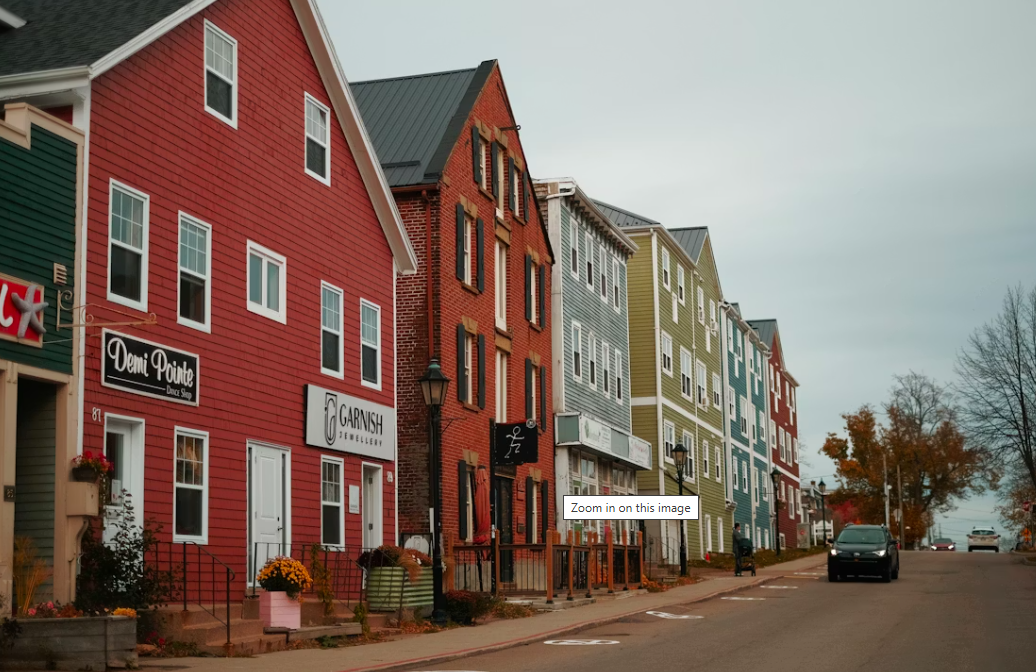
Charlottetown
Charlottetown is the provincial capital, population about 40,000 in the city itself and 85,000 in the metro area. It's the smallest provincial capital in Canada by population and arguably the most architecturally coherent — the downtown has kept a late-19th-century scale that the bigger Maritime capitals have lost.
What should I see?
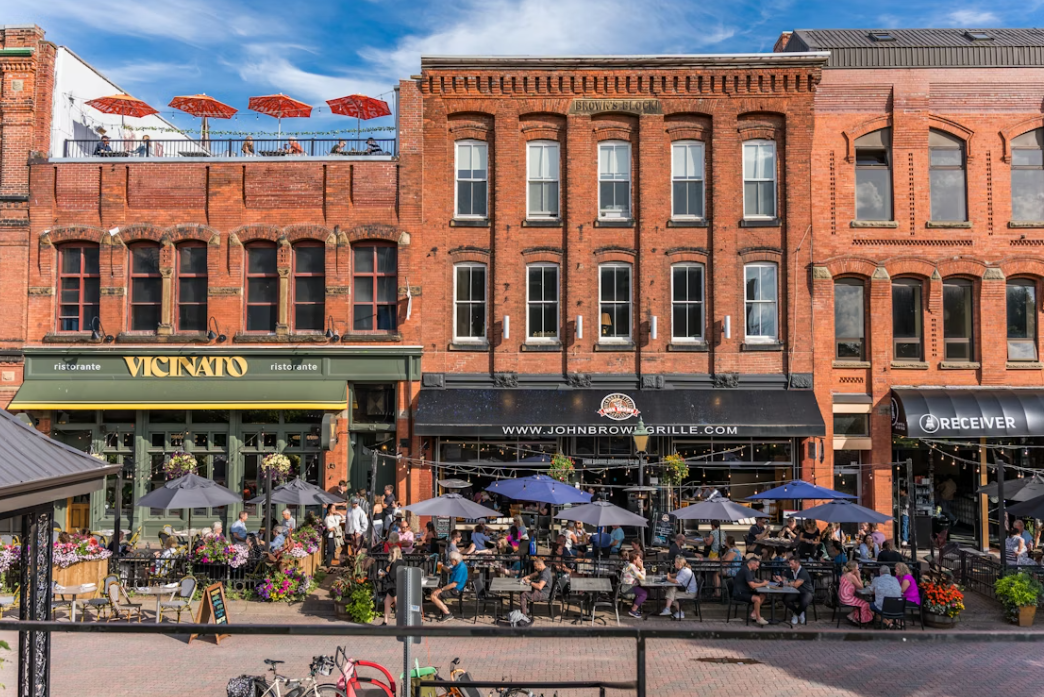
Province House, the Georgian legislative building where the 1864 conference happened, has been under restoration for several years and is expected to partially reopen in 2026 — check current status. The Confederation Centre of the Arts next door runs the Anne of Green Gables musical every summer (it's been running continuously since 1965, the longest-running annual musical in the world). The waterfront boardwalk runs around Peake's Wharf, a working harbour with tour boats and restaurants. Victoria Row, a pedestrian-only block of red-brick buildings between Richmond Street and Kent Street, is the eating-and-drinking centre of the city.
Is Charlottetown worth a full stay?
Two nights is enough to see the city itself; use it as a base for day trips to Cavendish, Victoria-by-the-Sea, and the eastern beaches. The city empties out after the tourist season ends in mid-October.
Most Popular Museum: Confederation Centre of the Arts
The Confederation Centre of the Arts occupies an entire block of downtown Charlottetown and stands as the national memorial to the Fathers of Confederation — funded by every province and territory as a living tribute to the 1864 meetings held in this city. It is part gallery, part theatre, part museum, and entirely central to Charlottetown's cultural identity. The art gallery houses one of Atlantic Canada's finest collections, with particular depth in historical Canadian painting and a strong program of contemporary exhibitions that consistently punch above what you'd expect from a city of this size.
The adjacent Province House National Historic Site — the actual building where the Confederation discussions took place — was undergoing a painstaking restoration as of writing, but even viewed from outside, the 1847 neoclassical structure commands its square with authority. The Confederation Centre's summer musical theatre productions, including the long-running Anne of Green Gables — The Musical, have run continuously since 1965, making it the longest-running annual musical production in Canadian history. Come for the gallery and stay for a show.
Your Best 5 Days in Charlottetown
Charlottetown is one of Canada's most walkable and historically concentrated cities. Everything worth seeing is within easy strolling distance of the harbour, and the city's small scale makes it possible to feel genuinely settled rather than tourist-rushed.
Historic Downtown & the Waterfront
Walk the compact heritage core from Province House Square down to Victoria Row — a pedestrian-friendly street of Victorian storefronts that fills with patios and live music in summer. Continue to the Charlottetown Farmers' Market for lunch, one of the best on the island and operating year-round. Spend the afternoon at the Confederation Centre gallery, then take an evening stroll along the waterfront boardwalk as the harbour lights come on.
Anne of Green Gables Country
Drive northwest to Cavendish for the morning — see the Day 3 notes below for the full itinerary — and return to Charlottetown for a Confederation Centre musical evening. Booking the show in advance is strongly recommended; the theatre fills quickly in July and August.
North Shore Beaches
Prince Edward Island National Park's north shore has some of the finest beaches in Atlantic Canada. The red sand dunes at Cavendish, Brackley, and Stanhope are the island's signature landscape. Swim, walk the dune boardwalks, and watch the sanderlings working the tide line. Brackley Beach is slightly less crowded than Cavendish and equally beautiful. Pack a picnic and commit to a full beach day — this is what PEI does better than anywhere else.
East End Exploration
Drive the scenic King's Byway east toward the tip of the island. Stop at Basin Head Provincial Park — the so-called "singing sands" beach, where the silica-rich sand squeaks underfoot — and the Basin Head Fisheries Museum for a look at the island's inshore fishing heritage. Continue to East Point Lighthouse at the island's tip. The drive back through the red farmland in evening light, with the potato fields running down to the sea cliffs, is quintessential PEI.
Summerside & the West
Drive west to Summerside, PEI's second city, for the Eptek Art and Culture Centre and the harbour waterfront. Continue along the west shore through Miscouche — the Acadian Museum here is excellent — and on to the fishing villages of the western tip. Cap the day at the Bottle Houses in Cap-Egmont, extraordinary folk-art structures built from recycled bottles that catch the afternoon light in extraordinary ways. Return to Charlottetown along the south shore through Victoria-by-the-Sea, a perfectly preserved Victorian fishing village.
Cavendish & Anne of Green Gables Country
Cavendish is the small north-shore community where L.M. Montgomery grew up and where she set her 1908 novel "Anne of Green Gables," which has sold more than 50 million copies and become a global phenomenon (particularly in Japan, where Anne is a cultural touchstone). The Green Gables farmhouse, owned by Parks Canada, is a reconstructed version of the house that inspired the novel. The Montgomery Birthplace and her gravesite are also nearby.
Is the tourist infrastructure overwhelming?
In peak summer, yes. There's a strip of attractions on Highway 6 (mini-golf, water parks, a wax museum) that isn't where anyone wants to be. Most of the island outside this one corridor is still quiet and rural. The Cavendish National Park beach, with red cliffs and warm water, is genuinely lovely even in the busiest week.
What about Japanese tourists and Anne?
Anne of Green Gables has been required reading in Japanese schools since 1952 and is enormously popular there. Japanese tourism to PEI has been an important part of the island's tourist economy for decades. Signs at Green Gables are frequently translated into Japanese.
Most Popular Museum: Green Gables Heritage Place
Green Gables Heritage Place is, strictly speaking, a national historic site rather than a conventional museum, but it functions as the most visited interpretive destination on Prince Edward Island and deserves full recognition as such. The farmhouse that inspired Lucy Maud Montgomery's fictional home of Anne Shirley was a real working farm belonging to cousins of Montgomery's family, and today it has been carefully restored to its late-nineteenth-century appearance with period furnishings, the famous haunted wood and Lovers' Lane walking trails, and interpretive displays about Montgomery's life and the enduring global reach of the Anne stories.
The honest thing to say is that Green Gables is genuinely moving even for visitors who arrived skeptically. There is something about the actual landscape — the way the red land meets the spruce woods and the sea light comes through the farmhouse windows — that makes Montgomery's writing suddenly make complete sense. Japanese visitors in particular arrive with a reverence for this place that can be affecting to witness; Anne of Green Gables has been a Japanese cultural touchstone since a 1952 translation, and the Cavendish area receives more Japanese tourists per capita than almost any rural destination in Canada.
Your Best 5 Days in Cavendish & Anne of Green Gables Country
Cavendish is a resort community in summer and a quiet farming landscape the rest of the year. The Anne of Green Gables literary heritage gives it a context far beyond its size, and the national park beaches are among the best in eastern Canada.
Green Gables & Haunted Wood
Arrive early at Green Gables Heritage Place before the tour groups arrive. Walk the Haunted Wood trail through the spruce forest that Montgomery described so evocatively in her journals. The adjacent Lucy Maud Montgomery's Cavendish Home site — where the author actually grew up — adds essential biographical context. Spend the afternoon at Cavendish Beach in the national park, one of the finest sand beaches in Atlantic Canada.
L.M. Montgomery Literary Trail
Drive the literary heritage route through the communities Montgomery knew: New London (her birthplace), Park Corner (Silver Bush, home of her cousins and the setting for several novels), and Kensington. The L.M. Montgomery Institute at UPEI in Charlottetown offers deeper scholarship for serious readers. In the evening, attend a performance at the Confederation Centre if you haven't already — the musical adaptation of Anne is a completely different experience from the books, and entirely worthwhile on its own terms.
National Park Dunes & Cycling
Rent bicycles and cycle the Gulf Shore Parkway through the national park — a car-free coastal road in summer that passes red sandstone cliffs, dune formations, and some of the most beautiful coastal scenery in eastern Canada. Stop for a swim at Brackley or Stanhope beaches. The Gulf of St. Lawrence water is surprisingly warm in July and August, and the swimming here is genuinely excellent.
Lobster Supper & North Shore Villages
Drive the North Shore through the fishing communities of North Rustico, Rustico, and Hunter River. A traditional PEI lobster supper — available at church halls and dedicated restaurants throughout the Cavendish area — is an essential cultural experience. New Glasgow Lobster Suppers has been operating since 1958 and remains the gold standard. The portions are obscene and the chowder is served first. Come hungry.
Farm Country & Red Roads
Rent a car and drive the red clay back roads through the interior farming country that Montgomery describes throughout her journals. The combination of potato fields, red soil, white farmhouses, and the occasional glimpse of the sea makes this the most PEI-looking landscape on the island. Stop at a roadside farm stand, buy new potatoes and strawberries in season, and find a field edge for a proper country lunch before heading back toward Charlottetown.

Summerside
Summerside is the island's second city, population about 16,000, on the south shore about 40 minutes west of Charlottetown. It's quieter than the capital and has a lovely boardwalk along Bedeque Bay. The College of Piping — one of the few dedicated Celtic music schools in North America — hosts a summer concert series that is one of the island's best-kept secrets.
Most Popular Museum: Eptek Art & Culture Centre
The Eptek Art and Culture Centre sits on Summerside Harbour in what was once a significant industrial waterfront, and it has become the cultural anchor of PEI's second city. The building itself is an elegant conversion that opens to harbour views, and the galleries inside host a rotating program of provincial and national exhibitions alongside a permanent collection with real strength in historical Island material. The PEI Sports Hall of Fame, housed within Eptek, is a more specialized draw but genuinely interesting for anyone wanting to understand how a province of 170,000 people produces professional hockey players at such a disproportionate rate.
Summerside is often overlooked by visitors who head directly from the Confederation Bridge to Charlottetown and Cavendish, and that oversight is a real loss. The city has a beautiful waterfront boardwalk, a restored heritage streetscape along Water Street, and the College of Piping — the only institution in North America dedicated to the preservation and teaching of Highland bagpiping and Celtic performing arts. Scheduled Highland storm performances run through summer and are completely free to watch.
Your Best 5 Days in Summerside
Summerside rewards the traveller who uses it as a base for the western half of the island rather than as a pass-through. The Acadian shoreline, the oyster beds of Malpeque, and the silver fox ranching history all radiate from this quiet city.
Waterfront & College of Piping
Walk the Summerside Harbourfront boardwalk in the morning, then visit Eptek Centre for the current exhibitions. In the afternoon, time your visit to coincide with a Highland Storm performance at the College of Piping on Water Street — the student pipers and step dancers perform from June through August, and the standard is remarkably high. The College's campus includes a small interpretive museum on Highland traditions in PEI.
Acadian Heartland
Drive west along the Evangeline Trail to the Acadian Museum in Miscouche — the oldest Acadian museum in PEI and the guardian of the region's French heritage. Continue to Abram-Village for the hand-weaving cooperative, where Acadian weavers have been producing traditional textiles since the 1970s. The cheeses and breads available in the Acadian communities along this coast are exceptional and distinct from what you find in the rest of the province.
Malpeque Bay Oysters
Malpeque Bay oysters are among the most celebrated bivalves in North America, and the bay itself — a vast, protected estuary north of Summerside — is one of the most productive shellfish environments on the Atlantic coast. Take an oyster farm tour from the Malpeque side and arrange a tasting directly at the source. The Cabot Beach Provincial Park on the north side of the bay has beautiful red sand beaches for an afternoon swim.
Western Tip & Bottle Houses
Drive to the western tip of PEI through the small fishing communities that feel entirely removed from the tourist circuit. North Cape Lighthouse sits at the very tip where the Gulf of St. Lawrence meets Northumberland Strait — the wind turbine test site here is functional rather than scenic but the coastline is dramatic. Return via Cap-Egmont to visit the Bottle Houses: three folk-art structures built from 25,000 recycled bottles by Édouard Arsenault. In afternoon sun they are extraordinary.
Confederation Bridge & Borden-Carleton
Walk or cycle the Gateway Village in Borden-Carleton at the Island end of the Confederation Bridge — the 12.9-kilometre bridge to New Brunswick is the longest bridge over ice-covered water in the world. The Gateway Village has decent seafood and good views of the bridge structure. On the return, stop at Victoria-by-the-Sea on the south shore, a tiny Victorian fishing village with a chocolate shop and summer theatre that is completely, inexplicably charming.
The East & the West Ends
Eastern PEI (Souris, East Point, the Points East Coastal Drive) is the quieter, less-touristed half of the island. Basin Head beach has "singing sands" — the quartz sand makes a soft whistling sound when you walk on it — and is arguably the finest beach on the island. Western PEI (Tyne Valley, West Point, the North Cape Coastal Drive) has the windmills at North Cape and the only Acadian-majority communities on the island.
Most Popular Museum: Basin Head Fisheries Museum
The Basin Head Fisheries Museum, perched above the famous singing sands beach at the island's eastern end, documents the inshore fishery that sustained PEI's coastal communities for generations. Basin Head was one of the most productive inshore fishing communities on the island — its sheltered lagoon provided safe harbour for the flat-bottomed boats that worked the Gulf's herring and mackerel schools — and the museum preserves this heritage through boat-building demonstrations, fishing equipment collections, and oral history recordings that give voice to the fishermen and their families in a way that conventional exhibits rarely achieve.
The beach below the museum is the primary reason most visitors stop here, and it deserves its fame. The silica content of the sand creates the characteristic squeaking sound underfoot that gives the beach its nickname, and the narrow channel between lagoon and Gulf makes for swift tidal currents and excellent swimming. Pair the museum with a full afternoon on the beach, then drive the eastern tip road to East Point Lighthouse — the last lighthouse at the far end of the island — before the return journey. This is the PEI that doesn't appear in the tourism brochures, and it's the most quietly beautiful part of the island.
Your Best 5 Days in PEI's East & West Ends
The extremities of Prince Edward Island are where the tourist infrastructure thins out and the island's agricultural and fishing character becomes most legible. These are the roads worth taking slowly.
East Point & Basin Head
Drive the King's Byway to East Point Lighthouse at the island's tip — the lighthouse tours are run by the lighthouse keepers' descendants and are wonderfully personal. Return west along the south coast of Kings County to Basin Head for the singing sands and fisheries museum. The red cliffs along this stretch of coast, eroding steadily into the sea, are dramatic and the light in late afternoon is spectacular.
Elmira Railway Museum & Souris
The Elmira Railway Museum at the eastern terminus of the old PEI Railway preserves the island's narrow-gauge railway heritage — PEI once had more railway per capita than any province in Canada, and the decision to build it was one of the conditions of Confederation. Souris, the largest town in eastern PEI, has a beautiful harbour and excellent seafood restaurants. Take the evening ferry from Souris to the Magdalen Islands if your itinerary extends to Quebec.
Orwell Corner Historic Village
Orwell Corner Historic Village reconstructs an 1895 PEI farming crossroads community with remarkable completeness — a church, school, general store, creamery, farmhouse, and barns all restored and interpreted. The village hosts ceilidh dances on Wednesday evenings in summer, with traditional Cape Breton and Island fiddle music that draws both locals and tourists. It's an evening worth rearranging a schedule for.
West Point Lighthouse & Cedar Dunes
Drive to the island's western tip to visit West Point Lighthouse — uniquely, you can stay overnight in the lighthouse itself, which has been converted into a small inn. The Cedar Dunes Provincial Park beach here is one of the least-visited and most beautiful on the island, with the black-and-white-striped lighthouse marking the shore. The west coast sunsets over Northumberland Strait are reliably magnificent.
South Shore Drive
The south shore of PEI between Charlottetown and Summerside has a different character from the famous north shore — quieter beaches, warmer water (the shallow Northumberland Strait heats up significantly in summer), and the charming village of Victoria-by-the-Sea with its chocolatier and summer theatre. Drive slowly along the coastal road, stopping at the wooden boardwalks that lead down through the dunes to the empty red-sand beaches. This is the island at its most unhurried.
PEI FAQs
How do I get to PEI?
Three options. Drive across the Confederation Bridge from New Brunswick (13 km, 10-12 minutes, toll about CAD $50 only on leaving the island). Take the ferry from Caribou, Nova Scotia to Wood Islands (75 minutes, seasonal — May through December, toll about CAD $83 only on leaving). Fly into Charlottetown airport, which has direct flights from several Canadian cities and seasonal service from a few U.S. hubs.
Why do the beaches have red sand?
The island sits on a bed of iron-rich red sandstone. When the stone erodes, the sand carries the iron. When iron meets air, it oxidizes — which is the same process that rusts a nail. The sand is literally rusting. It's not toxic, but it will stain light-coloured clothing.
What's the best time to visit?
July and August for warm water and everything open. September is cooler but still bearable and much less crowded. October for fall colours. Much of the tourist economy closes between mid-October and late May. Winters are milder than the mainland but still snowy.
Are PEI potatoes really different?
They're grown in iron-rich red soil, which PEI farmers argue gives them a firmer texture and sweeter flavour than most commercial potatoes. The island produces about a quarter of Canada's potato crop on a small fraction of the arable land.
Are the oysters any good?
Malpeque oysters are among the most famous in North America, and Colville Bay oysters are increasingly considered the best. The oyster season runs roughly mid-September through May. Any waterfront restaurant will serve them; Carr's Oyster Bar in Stanley Bridge is the classic pilgrimage.
Education & Post-Secondary Institutions
Prince Edward Island is Canada's smallest province, but it maintains a complete post-secondary system anchored by UPEI and Holland College, offering island students quality education close to home and welcoming increasing numbers of international students.
University of Prince Edward Island (UPEI)
PEI's only university, UPEI is home to the Atlantic Veterinary College — one of only five veterinary schools in Canada and a centre for aquaculture and animal health research critical to the island's agricultural and fishery industries. Also known for nursing, business, education, and arts. UPEI has seen dramatic growth in international student enrollment.
Holland College
PEI's public college, offering applied programs in culinary arts, tourism, trades, business, IT, and health across multiple campuses. Holland College's culinary arts program is particularly well-regarded, reflecting PEI's world-famous food culture of lobster, potatoes, and farm-to-table cuisine.
Maritime Christian College
A small Christian liberal arts college offering programs in theology, ministry, general arts, and biblical studies. Maritime Christian College serves the faith-based educational community in Atlantic Canada, with an emphasis on character formation alongside academic achievement. Its intimate campus culture reflects PEI's broader quality of life — personal, unhurried, and rooted in community.
PEI Public School System & Adult Learning
PEI's public school system, administered by the Department of Education and Early Childhood Development, serves students in both English and French (immersion and francophone schools). The province has one of the highest per-pupil spending rates in Atlantic Canada. The Island Literacy Alliance and the Adult Learning and Literacy program provide continuing education for adults returning to learning, reflecting PEI's commitment to lifelong education in all communities, including the rural north and east shores.
PEI's small size means that most Islander students who pursue university or college can do so without leaving their communities and families — a quality of life advantage that sets the island apart from most Canadian provinces. The island's growing international student population (particularly from South Asia and Southeast Asia) has added significant cultural diversity to Charlottetown and has become an important driver of the local economy, with the provincial government actively managing international enrollment to ensure integration and community benefit.

Sports Teams & Athletic Culture
PEI's sporting culture is proportionally intimate — which doesn't mean casual. The Charlottetown Islanders draw loyal island-wide crowds and golf is taken seriously on a province with more courses per capita than anywhere else in Canada.
 ISLNDS
Charlottetown Islanders
The Islanders play at Eastlink Centre in Charlottetown — a modern arena serving the whole island. Games are among the best-attended in the QMJHL relative to host city size. Charlottetown has 40,000 people and the arena seats over 3,000.
 GOLF PEI
PEI Golf Culture
PEI has more golf courses per capita than any other province in Canada. The links-style courses on the north shore and Fox Meadow at Cavendish are regularly ranked among Atlantic Canada's best. Golf is woven into summer life here.
Culture, Arts & Identity
PEI is small enough to have a coherent cultural identity rather than the regional variations of larger provinces. It is a place where everyone knows everyone within two degrees of separation, where the tourism economy and the farming economy coexist in the same landscape, and where Anne of Green Gables has generated both genuine pride and mild exhaustion among those who grew up here.
Anne of Green Gables
L.M. Montgomery's 1908 novel launched a cultural industry that now generates tens of millions in tourism annually. The Green Gables Heritage Place in Cavendish draws visitors from Japan, Korea, the UK and across North America. Japanese tourists in particular have a deep relationship with the story — it has been taught in Japanese schools for decades. The tension between the tourism brand and the literary work it represents is something Island writers and cultural critics think about carefully.
The Birthplace of Confederation
Charlottetown hosted the 1864 conference at which the plan for Canadian Confederation was drafted, earning PEI the title "Birthplace of Confederation." Province House, where the delegates met, is a National Historic Site undergoing restoration. The title sits a little awkwardly given that PEI itself didn't join Confederation until 1873 — six years after the rest, and only after the federal government agreed to ferry service, which later became the Confederation Bridge.
Food Culture
PEI potatoes are the province's most famous agricultural product and a genuine point of pride. The island's sandy red soil and cool climate produce potatoes that chip, bake and mash differently from what you buy in most grocery stores. The lobster fishery opens on a specific date each spring, and the first-day catches are a community event. The region around Malpeque Bay produces oysters that are exported worldwide.
Music and Theatre
The Confederation Centre of the Arts in Charlottetown has been staging the Anne of Green Gables Musical every summer since 1965, making it the longest-running annual musical theatre production in the world. The Charlotte Centre also has a serious visual arts collection and stages year-round theatre that goes well beyond the tourist season. Charlottetown has a live music scene genuinely out of proportion to its size.
PEI's Hall of Icons
For Canada's smallest province, PEI has been remarkably good at producing famous Canadians. The combination of a tight-knit population, an outsized literary tradition, and a deep musical heritage means the Island punches well above its weight.
Lucy Maud Montgomery
WPView on Wikipedia →The author of Anne of Green Gables, the Edwardian-era children's novel that has sold more than 50 million copies worldwide and is taught in Japanese, Korean and Polish schools to this day. The Green Gables Heritage Place at Cavendish is the spiritual home of a global readership.
Sir John A. Macdonald (Charlottetown Conference)
WPView on Wikipedia →Not from PEI, but indelibly associated with it: the Charlottetown Conference of September 1864 was where the Fathers of Confederation first agreed on the principle of a Canadian union. PEI itself didn't join Canada until 1873 — but the country was, in a real sense, born here.
Stompin' Tom Connors
WPView on Wikipedia →The most beloved hometown country songwriter in Canadian history. "Bud the Spud" and "The Hockey Song" have become national anthems by quiet acclamation. Stompin' Tom spent much of his early life in the small PEI village of Skinners Pond, which he sang about ever after.
Heather Moyse
WPView on Wikipedia →Two-time Olympic gold medallist in bobsleigh (Vancouver 2010 and Sochi 2014). Moyse was originally a rugby player at the University of Waterloo before being recruited into bobsleigh. Officer of the Order of Canada.
Megan Follows
IMDbView on IMDb →The Canadian actress who played Anne Shirley in the iconic 1985 CBC miniseries adaptation of Anne of Green Gables, opposite Colleen Dewhurst's Marilla. Filmed on PEI, the series remains the canonical screen Anne for a global audience.
Lennie Gallant
WPView on Wikipedia →Acadian musician and storyteller whose bilingual songs about Maritime working life have made him one of the most-honoured musicians in PEI history. The annual Searching for Abegweit shows in Charlottetown are local landmarks.
Catherine Callbeck
WPView on Wikipedia →The first woman in Canadian history to be elected premier of a province. Callbeck served as Liberal premier of PEI in the early 1990s and later as a senator. She continues to be active in Maritime women-in-politics initiatives.
Milton Acorn
WPView on Wikipedia →"The People's Poet." Acorn's working-class Maritime poetry won the Governor General's Award in 1976 and remains a touchstone of Canadian leftist verse. The Milton Acorn Festival each summer celebrates his legacy.
Regional Cuisine: What PEI Actually Eats
PEI's food culture is shaped by its red soil, its surrounding sea, and its small farms. The Island's reputation for potatoes, lobster, oysters and mussels is earned — these are some of the best in the world, and the Island knows it.
Malpeque Oysters
Briny, lightly sweet, with a clean finish. Malpeque Bay produces oysters that are exported to top restaurants in Tokyo, New York and Paris. The Carr's Oyster Bar in New London or the Lobster on the Wharf in Charlottetown will shuck them in front of you. Local mignonette is just shallots, vinegar and pepper.
Lobster Supper
The community-hall lobster supper — a fixed-price meal of seafood chowder, mussels, a whole lobster with butter, salads and pie — is the Island's defining tourist tradition done right. New Glasgow Lobster Suppers (Liona's) and St. Ann's Lobster Suppers do the original since the 1950s.
PEI Potatoes
The red-iron sandy soil produces potatoes that bake, fry and mash with a fluffier texture than the rest of the country's. The PEI Potato Museum in O'Leary is the state-of-the-province expression. The PEI poutine — fries, curds and gravy — is a peculiarly local good version of the Quebec original.
Cow's Ice Cream
PEI's homegrown ice-cream chain, hand-rolled cones, with a tongue-in-cheek branding (cow puns on every t-shirt). Has expanded to airports across the country, but the original Charlottetown waterfront shop is the pilgrimage. Pure PEI cream.
Mussels from Hardy Mussel Farms
PEI is the largest producer of cultivated mussels in North America. Steamed in white wine, garlic and butter, served with crusty bread for the broth. Order at Lobster on the Wharf or the Inn at Bay Fortune.
Solomon Gundy & Maritime Specialties
The pickled-herring tradition of Atlantic Canada appears here too, alongside oatcakes, molasses cookies, cretons (Acadian pork-and-spice spread) and the more recent Island-craft additions of brewery-style pickles and farm-cheese boards.
Top 10 Restaurants in Prince Edward Island
PEI eats better than its small population would suggest. The island's pantry — Malpeque oysters, lobster, mussels, cultivated potatoes, beef from family farms, the surprisingly serious dairy program — feeds a kitchen culture that has matured significantly over the past fifteen years. Charlottetown has most of the chef-driven rooms; the rural inns and lobster suppers across the island add the second layer; and Michael Smith's FireWorks at the Inn at Bay Fortune is the destination room visitors plan trips around. Here are ten to start with.
FireWorks at the Inn at Bay Fortune
Chef Michael Smith's wood-fired feast at the Inn at Bay Fortune is the most distinctive dining experience in Atlantic Canada. The 1900s farmhouse on Bay Fortune runs an oyster hour on the lawn, then moves guests to long communal tables in the converted barn for a multi-course meal cooked entirely over wood — much of it from the inn's own farm and the bay outside the windows. Reservations are weeks out in summer.
Lot 30 Restaurant
Chef Gordon Bailey's downtown Charlottetown restaurant is the most-decorated room in the province — Canada's Best New Restaurant on enRoute's list when it opened, and consistently among the country's best since. The cooking is contemporary with strong PEI sourcing; the wine list is thoughtful; the room is intimate without being precious.
Terre Rouge Bistro Marché
A bistro-and-market hybrid on Queen Street, Terre Rouge sources directly from a network of named PEI producers and serves a seasonal menu that changes with what the farmers are bringing in. The retail side sells the cheese, charcuterie and bread used in the kitchen; the dinner menu is short and confidently French-leaning.
The Pearl Eatery
On the north shore between Cavendish and North Rustico, the Pearl runs a bright, gallery-style room with a kitchen that takes the island's pantry seriously — local seafood, garden vegetables, an in-house bakery program. The lunch is the best meal of the day; the dinner is the more romantic option. It's worth the drive from anywhere on the island.
Richard's Fresh Seafood
A roadside takeout window at Covehead Harbour, Richard's serves the best lobster roll on the island — fresh lobster, lightly dressed, on a buttered roll, with hand-cut fries on the side. There are picnic tables out front and a view of the fishing boats. Cash and small bills help; the line moves quickly.
Dalvay by the Sea
A 1895 summer mansion in PEI National Park, Dalvay by the Sea runs a dining room in the original house's main floor — wood-paneled walls, fireplaces, a wraparound porch. The cooking is more elevated than most resort dining rooms manage, with a tasting-menu option that changes weekly and a serious wine cellar in the basement.
The Inn at New Glasgow's The Mill in New Glasgow
On the north-shore river in New Glasgow, the Mill is set in a converted 1898 grist mill with the original waterwheel still visible from the dining room. The menu is contemporary Canadian with strong PEI sourcing; the bread is baked in-house; the dessert program is among the better ones on the island. It's a half-hour from Charlottetown and worth it.
Sims Corner Steakhouse & Oyster Bar
On Charlottetown's main downtown corner, Sims is the city's serious steakhouse — Canadian Prime cuts, a proper oyster bar with Malpeques and other local varieties, a wine cellar that takes Bordeaux and Tuscany seriously. The patio in summer overlooks the city's busiest pedestrian intersection.
Annie's Table
A small cooking-school-and-restaurant in New London (the village where Lucy Maud Montgomery was born), Annie's Table runs a tight dinner service three nights a week and a more flexible cooking-class schedule the rest of the time. Chef Annie Rashid's cooking is quietly ambitious — local seafood, hand-rolled pastas, garden vegetables — and the room is small enough that the conversation often crosses tables.
Water Prince Corner Shop
The casual lobster-roll counter in a converted corner shop near the Charlottetown waterfront. Steamed lobster, lobster rolls, mussels, chowder, fish and chips. The room is about thirty seats; in summer the line stretches down the street. It's the most-photographed casual meal on the island, and deservedly so.
Whose Land Are You On?
Prince Edward Island, known to its first people as Epekwitk ("resting on the waves"), is the unceded ancestral territory of the Mi'kmaq Nation. The Mi'kmaq have been in this region for at least 11,000 years, and the Peace and Friendship Treaties signed with the British Crown in the 18th century did not cede any land.
The Two Mi'kmaq First Nations of PEI
The Lennox Island First Nation in Malpeque Bay is one of the oldest reserves in Canada (1872) and is home to about 800 Mi'kmaq members. The Abegweit First Nation, comprising three smaller reserves at Scotchfort, Morell and Rocky Point, is the larger of the two by population. Together, the two communities have about 1,500 registered members.
The Lennox Island Cultural Centre
The Lennox Island Cultural Centre and the adjacent Mi'kmaq Cultural Trail offer one of the best Indigenous-led visitor experiences in Atlantic Canada. The Lennox Island bridge causeway, opened in 1973, gave the community road access for the first time.
Treaty Days & Honouring Mi'kmaq Heritage
October 1 is the Mi'kmaq Treaty Day across the Maritimes — a day to remember the Peace and Friendship Treaties and the ongoing nation-to-nation relationship. Public events take place in Charlottetown and on Lennox Island. The Membertou Trade and Convention Centre in Sydney, Nova Scotia, is the nearest hub for Mi'kmaq cultural events of larger scale.
Your Best 5-Day Stay in Prince Edward Island
PEI is small — you can drive end to end in three hours — but that smallness is its charm. Five days is enough to see Charlottetown, Cavendish, the Anne sites, the North Shore beaches, the lighthouses of Eastern PEI, and the lobster country in the west. Rent a car at the Confederation Bridge or Charlottetown Airport.
Charlottetown — Province House and the Waterfront
Arrive by air, ferry from Nova Scotia, or across the Confederation Bridge from New Brunswick (12.9 km, the longest bridge over ice-covered water in the world). Walk the historic district: Province House (the Birthplace of Confederation, currently undergoing restoration), the Confederation Centre of the Arts, the brick-and-cobblestone Victoria Row.
Lunch at the Lobster on the Wharf. Afternoon stroll the boardwalk; if it's summer, take in Anne of Green Gables — The Musical at the Confederation Centre. Dinner at Terre Rouge or Sims Corner Steakhouse.
Cavendish & Anne Country
Drive 30 minutes to Cavendish. Visit Green Gables Heritage Place — the farm that inspired the novel — and the Site of L.M. Montgomery's Cavendish Home (foundations only, but moving). Walk the Cavendish Cliffs and Beach in PEI National Park.
Lunch at Carr's Oyster Bar in Stanley Bridge for the best oysters in Atlantic Canada. Afternoon: continue to Charlotte's Web art gallery and the Anne of Green Gables Museum at Park Corner. Dinner at the Olde Glasgow Mill. Sleep on the North Shore.
Eastern PEI & the Points East Drive
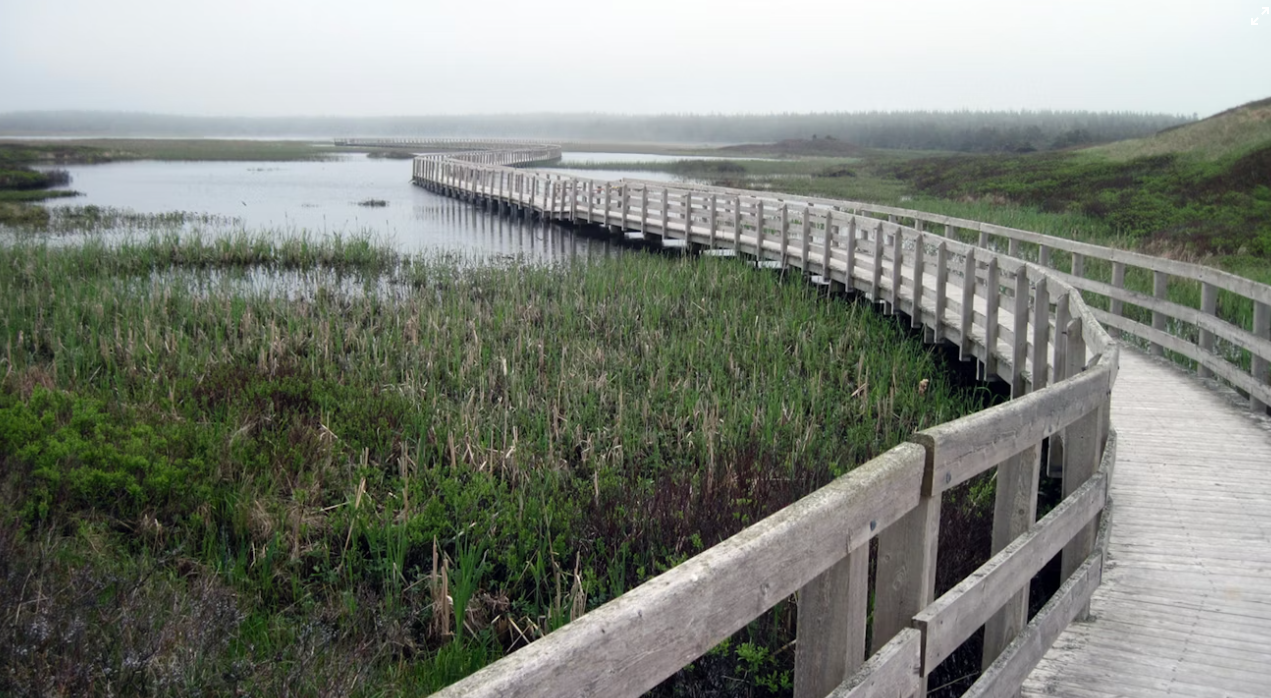
Drive eastward along the coast. Stop at Greenwich (PEI National Park's eastern unit, with its parabolic dunes and the boardwalk through the bog). Continue to Souris and the Singing Sands of Basin Head Beach (the sand actually squeaks underfoot when dry).
Tour the East Point Lighthouse — the easternmost in PEI — and a string of other lighthouses on the way back. Dinner at the Inn at Bay Fortune (chef Michael Smith's flame-grilled FireWorks experience is one of the great culinary nights in Atlantic Canada). Sleep there if you can.
Western PEI & the Lennox Island Mi'kmaq Community
Drive west across the Island. Visit the Lennox Island First Nation Cultural Centre and the Mi'kmaq Cultural Trail for an Indigenous-led morning. Continue to Tyne Valley and have lobster at the Tyne Valley Inn.
Afternoon: Anne of Green Gables Museum at Silver Bush, the College of Piping in Summerside (catch a piping demonstration if there's a class running), and a sunset walk on the Cabot Beach. Sleep in Summerside.
Confederation Trail & Slow Departure
Rent a bicycle and ride a stretch of the Confederation Trail — the converted-railway path that runs the length of the Island. The section between Hunter River and Charlottetown is gentle and well-treed. Lunch at Receiver Coffee in Charlottetown.
Afternoon: Cows Ice Cream cone on the waterfront, last walk through Victoria Row, perhaps a final round at the Founders' Food Hall and Market. Drive across the Confederation Bridge or fly out of YYG with the Island already feeling like a place you'd return to.
Five Days in Charlottetown
Charlottetown is small enough that five days might sound like too many, and big enough that by the end of those five days you'll wish you'd booked a sixth. The capital of Canada's smallest province is a walking city — a square mile of red-brick Confederation-era buildings, a working harbour, and one of the country's best small-city restaurant scenes packed into the few blocks between Province House and Peake's Wharf. Stay downtown (the Great George, the Holman Grand, the Inns on Great George) and base your day trips out from there. A car is helpful for Days 3 and 4; the rest you can walk.
Founders' Hall, Province House & Peake's Wharf
Start with a flat white at Receiver Coffee on Victoria Row, then walk the long block to Founders' Hall on the harbourfront for the multimedia overview of how, in September 1864, twenty-three men sat in a stone room a few hundred metres away and quietly invented Canada. Province House is closed for restoration but the temporary Confederation Centre exhibit fills the gap admirably.
Lunch at Founders' Food Hall & Market — twelve Island producers under one roof, from oysters to dulse butter. Afternoon: a slow harbour walk past Peake's Wharf to the Charlottetown lighthouse and back. Dinner at Terre Rouge Bistro Marché on Queen Street — the Island-sourced charcuterie board is the best meal in town under thirty dollars. End the night at a show at the Confederation Centre of the Arts; Anne of Green Gables – The Musical has run there every summer since 1965.
Victoria Park, the Battery & Old Charlottetown
Morning run or walk in Victoria Park, the leafy seaside park that wraps the western edge of the city. The boardwalk along the harbour, the Battery cannons and the white wedding-cake of Government House (the Lieutenant-Governor's residence) are the loop. Brunch at The Pilot House in the old Customs Building or at Beanz Espresso Bar.
Spend the afternoon walking the heritage district: the Beaconsfield Historic House, the Kirk of St. James, the brick rowhouses on Pownal and Prince. The PEI Brewing Company on Kensington Road is the working brewery; the tour finishes in the taproom and the beer-battered haddock is the surprise. Dinner at Sims Corner Steakhouse & Oyster Bar — Island oysters, dry-aged steak and a Maritime wine list.
North Shore Day — Cavendish, Beach, Anne
Drive 35 minutes north to Cavendish. Green Gables Heritage Place — the farmhouse that inspired Lucy Maud Montgomery's novel — is the morning stop, and the trails through the Haunted Wood and Lover's Lane are gentler and better-loved than any photograph suggests. Lunch at Carr's Oyster Bar in Stanley Bridge for a heaping platter of Malpeques on the half shell.
Afternoon at PEI National Park's Cavendish Beach — long, dune-backed, the warmest saltwater swim north of the Carolinas in late July. Drive back via the Gulf Shore Parkway and the Dunes Studio Gallery in Brackley for one of the better contemporary craft galleries in the Maritimes. Dinner back in Charlottetown at Lot 30 — chef Gordon Bailey's tiny tasting-menu room is widely considered the best meal on the Island.
Points East — Greenwich, Souris, Dunes
The eastern end of the Island gets less attention than Cavendish and rewards visitors who go there. Drive an hour east to Greenwich, the quietest unit of PEI National Park, where a 4.8-kilometre boardwalk loops through parabolic sand dunes and a freshwater pond — the Canadian Shield's strangest beach. Lunch at the Inn at Bay Fortune; chef Michael Smith's fire-fed kitchen is a destination on its own.
Carry on to Souris, the lighthouse-and-fishing-wharf town at the Island's east end, and to Basin Head Provincial Park for the famous "singing sands." Drive back to Charlottetown by the King's Byway. Dinner at The Gahan House on Sydney Street; the IPA on tap is brewed forty steps away.
Confederation Trail, Cows & Departure
Rent a bicycle for two hours from MacQueen's Bike Shop and ride a stretch of the Confederation Trail out toward Stratford and back. The trail follows a converted CN rail bed and is gentle, treed, and on a good morning startlingly quiet. Brunch at Receiver Coffee back at the Brass Shop on Victoria Row.
Save the last hour for the obligatory Cows ice cream cone (the Wowie Cowie is the Charlottetown order) and a final harbour walk past the schooners at Peake's. The drive across the Confederation Bridge takes 13 minutes and gives you a thirteen-minute view of an Island you'll be planning your return to before the toll booth.
Commerce & Industry
Prince Edward Island is the smallest province in Canada by both area and population — fewer than 180,000 people on an island 224 kilometres long — and yet it has built an economy that is more diversified and more dynamic than its size would suggest. The red soil, the lobster boats, and the Anne of Green Gables legacy are real and important, but they share the island with a significant aerospace sector, a growing technology cluster, a world-class mussel aquaculture industry, and an immigration rate that has made PEI one of Canada's fastest-growing provinces per capita since 2015.
1. Tourism
Tourism is disproportionately important to PEI's economy, generating roughly $600 million annually and employing one in five islanders at peak season. The anchor is the Anne of Green Gables heritage — Lucy Maud Montgomery's 1908 novel has been translated into dozens of languages and still draws Japanese tourists in particular, for whom PEI has a near-mythological status. But the island's tourism has diversified: red sand beaches and dunes, world-class golf courses (including a Links at Crowbush Cove and the Dundarave course), cycling the Confederation Trail across the island, eating lobster straight from the boat in North Rustico Harbour, and the PEI International Shellfish Festival are all draws. The summer tourism spike is intense — the island's population effectively doubles — and managing it without destroying what draws people is the province's central tourism management challenge.
2. Agriculture — Seed Potatoes
PEI's red iron-rich soil produces the finest seed potatoes in the world — the DNA library of commercial potato varieties that farmers from Colombia to Indonesia rely on to plant their crops. The province exports seed stock to more than 20 countries and is Canada's largest potato-growing province by hectare. Processing — McCain Foods operates its largest Canadian plant on the island — adds value. The potato industry is the foundation of PEI's agricultural identity even as the sector diversifies into other vegetables, grains, and organic production.
3. Fisheries — Lobster & Mussels
PEI Blue Mussels are among the most recognized shellfish brands in the world. The island's aquaculture sector has built a global market for a product that grows naturally in the protected estuaries of the north shore. Lobster remains the dominant commercial fishery by value, and the spring and fall fisheries out of ports like North Rustico, Malpeque, and Souris are economic events that the whole island follows. Oyster aquaculture — Malpeque oysters have been famous since the 19th century — has expanded significantly.
4. Aerospace
Charlottetown is home to StandardAero (formerly Dunlap Aviation), one of North America's largest independent aircraft engine maintenance and overhaul companies, and to GE Aviation's service centre. The aerospace sector employs more than a thousand workers — an enormous number for an island economy — and pays wages that anchor middle-class prosperity in the Charlottetown area. The provincial government and UPEI have both invested in the training pipelines that feed these operations.
5. Technology & Bioscience
Charlottetown's BioAlliance cluster — centred on UPEI, the National Research Council's Aquatic and Crop Resource Development division, and a handful of bioscience companies — has given the province an unexpected role in agricultural genomics, mussel genetics, and crop science. The IT sector has grown with the Immigrant Entrepreneur Program's success in attracting technology entrepreneurs from South Asia and China who have seeded companies in digital media, software, and cybersecurity.
6. Food Processing
McCain Foods' Borden-Carleton facility is one of the largest frozen potato processing plants in North America. Premium Brands Holdings' Cavendish Farms operates similar scale operations. The two combined represent hundreds of millions in exports and thousands of jobs that process PEI's raw agricultural output into globally sold products.
7. Financial Services
Charlottetown's growing professional services sector — accounting, insurance, investment management, legal services — has benefited from the immigration-driven population and business growth. Provincial credit unions and the chartered banks all operate significant Charlottetown offices. The provincial government has worked to attract financial services back-office operations as part of its economic diversification strategy.
8. Construction
Population growth has driven the strongest construction market in PEI's history since roughly 2018. New residential subdivisions around Charlottetown and Stratford are being built at a pace that the island's infrastructure — roads, water, sewage — is struggling to keep up with. Commercial construction in downtown Charlottetown — new hotels, student residences for UPEI's growing international student body, office buildings — adds to a sector that has become one of the province's most reliable employment sources.
9. Government & Education
The Province of PEI, the City of Charlottetown, UPEI, and Holland College collectively employ a substantial share of the working population in concentrated government and education roles. Memorial University's satellite campus, the Atlantic Veterinary College (Canada's sole veterinary program east of Montreal), and Holland College's trades programs contribute to a postsecondary sector much larger per capita than the province's size would imply.
10. Renewable Energy
PEI covers approximately 30 percent of its electricity needs from wind power, generated primarily at the North Cape Wind Energy Centre and the eastern end of the island. The province has set ambitious targets for renewable electricity and is exploring the feasibility of a subsea cable to import New Brunswick hydro when wind generation is insufficient. Energy independence is both an environmental and economic priority for an island that pays fuel costs amplified by maritime logistics.
Politics
Prince Edward Island has been governed by an unusual level of gentility — even in Canadian terms — for most of its political history. The province long alternated between Liberals and Progressive Conservatives without the ideological intensity that characterizes politics in larger provinces, a reflection of the small size of the electorate (everyone knows everyone) and the practical necessity of working across party lines when the legislature has fewer than 30 members. The PCs under Dennis King have governed since 2019, navigating the island's characteristic centre-right populism with notable pragmatism.
The Progressive Conservative Party & Premier Dennis King
Dennis King won a minority government in April 2019 and a majority in April 2023 — a mandate built on a platform of fiscal responsibility, housing affordability, environmental stewardship, and support for the rural communities whose economic base in agriculture, fisheries, and tourism underlies the whole island. King governs from the moderate centre of the PEI PC tradition — not the resource-sector conservatism of Alberta or Saskatchewan, but a pragmatic rural conservatism that takes environmental issues seriously because the farmers and fishers who vote PC live directly with the consequences of agricultural runoff, coastal erosion, and depleted fish stocks.
The most significant political challenges facing PEI's government are ones that the island can see from its shoreline: climate change is measurably eroding PEI's red sandstone coastline at an accelerating rate, and some estimates suggest that the island's area will shrink meaningfully over the coming century. Housing — driven by immigration and internal migration to Charlottetown — has transformed the province's housing market almost beyond recognition in five years. King's government has passed gentle supply-side housing measures and worked with municipal governments to accelerate approvals, with mixed results given the pace of demand.
The Liberal opposition and the Greens — PEI has been fertile ground for the Green Party relative to its national standing — hold seats in the legislature. The Green Party's Charlottetown-area voter base reflects a younger, university-connected demographic that cares about the island's environmental future in ways that the province's traditional political coalitions had difficulty speaking to. Dennis King's PCs have had to address environmental issues more seriously than their predecessors partly because of the competitive pressure the Greens represent in the Charlottetown ridings that decide majorities.
A Poem for Prince Edward Island
A poem for the gentle island
The red roads of the island run between
the potato fields and the sea —
a landscape so persistently serene
it almost hides what it took to be.

The Acadians were deported from this shore,
their dyke-fields left to strangers. The Mi'kmaq
watched a second people take the floor
of their home after the first had tracked

their way through centuries of living here.
And then the Loyalists, and then the Scots,
and then the railway argument that year
that bought Confederation and its lots.

But what remains is the redness of the earth,
the sandstone ground to clay to red to road —
an island that has measured its own worth
in tidal inlets, oysters, and the ode

that Montgomery wrote for a red-haired girl
who never quite existed, but who made
a million readers want to see this world
of gabled houses, flower-bordered shade.

Charlottetown keeps Confederation's room
exactly as it was in sixty-four —
the table where the country found its bloom,
the chairs, the afternoon light on the floor.

Small province. Enormous sky.
The strait between it and the mainland narrows
enough that you can almost see, from high
ground, New Brunswick. But the island borrows

nothing from its neighbours — keeps its own
dialect of weather, of reserve,
of knowing that the best things here were grown
from soil that takes a generation to deserve.
Airports & Getting There
Charlottetown Airport (YYG) is the province's only commercial airport, and it handles the island's air traffic with an efficiency that reflects PEI's scale — this is a small province and a small airport, but it works well. Air Canada and WestJet both serve Charlottetown with multiple daily departures to Toronto Pearson, Montreal Trudeau, and Halifax Stanfield. The Halifax connection is short — about 35 minutes in the air — and useful for passengers connecting from international flights arriving at Halifax, though in summer the schedule aligns well enough that many visitors fly direct from central Canada. The terminal building was expanded and modernized in recent years and now handles the summer surge — the island's population roughly doubles in July and August with tourists — without the bottlenecks that used to characterize the original building. Car rental agencies are all represented at the terminal, and the airport sits close enough to Charlottetown's downtown that a taxi takes 10 to 15 minutes. Full schedule and parking details are at flychi.com.
▶ Watch: Discover PEI — Official Tourism Overview — Tourism PEI
The Confederation Bridge
The Confederation Bridge, which opened in 1997 and connects Borden-Carleton, PEI to Cape Jourimain, New Brunswick, is how most visitors and residents actually arrive on the island. The bridge is 12.9 kilometres long — the longest bridge over ice-covered water in the world — and the crossing takes about 10 minutes by car. The toll ($50.75 for a standard vehicle as of 2025) is collected only when leaving the island, which means arriving is free and the bridge operators bank the toll for the return trip. Driving across the Confederation Bridge on a clear morning with the Northumberland Strait laid out in both directions is one of those experiences that impresses even people who have done it dozens of times. Cyclists and pedestrians are not permitted on the bridge, but a shuttle service operates for those arriving or leaving without a vehicle.
Northumberland Ferries from Nova Scotia
Northumberland Ferries operates seasonal service between Caribou, Nova Scotia and Wood Islands, PEI, running from May through December. The crossing takes about 75 minutes and the ferry carries vehicles, cyclists, and foot passengers. For visitors coming from Nova Scotia, the Wood Islands ferry landing in the eastern part of the island is a scenic arrival point that immediately places you in the pastoral landscape of rural PEI rather than arriving via the bridge and working your way east. The ferry schedule varies by season and demand — there can be wait times of a full sailing or more on peak summer weekends — so checking conditions and arriving early is advisable. The boat ride itself, with the red cliffs of the PEI shoreline appearing across the strait, is a fine introduction to the island.
Cost of Living & Housing
PEI's housing market has experienced more volatility over the past decade than any other Atlantic province, driven by strong in-migration from mainland Canada and international newcomers, a tourism economy that has pushed short-term rental demand, and the fundamental constraint that the island has a finite amount of land. Charlottetown's rental market has tightened considerably: a one-bedroom apartment in the city now typically runs $1,300 to $1,700 a month, with newer units in Stratford and the downtown core pushing toward the top of that range. A few years ago these prices would have been unthinkable in PEI, and they represent a genuine affordability challenge for people working in the tourism, agriculture, and service sectors that drive the island's economy.
Rural PEI and the Ownership Market
Step outside Charlottetown and the cost picture shifts dramatically. Communities like Summerside, Montague, Souris, and Alberton retain much more accessible housing. Two and three-bedroom houses with land in good condition can still be found in the $200,000 to $350,000 range in many rural communities, though even these markets have moved upward. The province has taken some measures to address housing supply including fast-tracking construction approvals, and several new developments have added rental stock to the Charlottetown market. For anyone considering PEI as a place to live rather than just visit, the island's smaller scale means that even rural addresses feel connected — nothing is more than about 75 minutes from Charlottetown — and the quality of life for families who can secure stable housing is genuinely high.
Food Costs and Island Advantages
Groceries in PEI run slightly higher than mainland Canada for most packaged and imported goods, reflecting the province's geographic isolation and dependence on supply chains that route through New Brunswick. The HST rate is 15 percent province-wide. What partially offsets the grocery premium is access to extraordinary local food at farm-gate prices: PEI potatoes, Malpeque oysters, lobster during season, and the island's excellent beef are all available directly from producers at prices that represent genuine value. The Charlottetown Farmers' Market and roadside farm stands throughout the summer are genuinely worth the detour. Lobster suppers — the communal church basement and community hall meals that are a PEI summer tradition — are an outstanding value proposition for a meal that in a Halifax restaurant would cost three times more.
Climate & Seasonal Weather
Prince Edward Island has the warmest summers of any Atlantic province, and this fact is not incidental to its identity as a tourist destination. The island's position in the Northumberland Strait, surrounded by relatively shallow water that heats up faster than the open Atlantic, produces July and August temperatures that average around 23 degrees Celsius — warmer than Halifax, noticeably warmer than St. John's — with days that regularly climb into the high 20s. The Northumberland Strait water temperature itself reaches 20 degrees or above by late July at beach sites like Cavendish, which is genuinely warm for Canadian salt water and contributes to the island's summer viability as a beach destination. The light in July has that particular northern Maritime quality — long evenings, soft light over red cliffs and green fields — that is the island's most underrated atmospheric asset.
The Famous Red Sand and Seasonal Colour
PEI's red soil and red sand beaches, coloured by iron oxide, take on different characters through the seasons. In summer the red is vivid against the blue water and green fields. In fall, after harvest, the ploughed fields turn a deep burgundy that makes the interior of the island look almost abstract. The fall colours on PEI are less dramatic than New Brunswick or Nova Scotia because the island has less forested land and more open agricultural landscape, but the combination of harvest fields, ocean, and the low October light is beautiful in its own right. Autumn is also the best time for cycling the island — the tourist traffic drops sharply after Labour Day, the temperatures are comfortable for physical activity, and many of the restaurants and accommodations that were sold out all summer have availability.
Winter and the Ice Crossing Era
PEI winters are cold but not extreme. The island is exposed to North Atlantic weather patterns and gets regular snowfall from December through March, though the total accumulation is generally less than New Brunswick's interior. What characterizes PEI winters more than deep snow is the wind: the island's flat topography and exposure mean that cold winds off the strait make temperatures feel significantly colder than the thermometer reads. Before the Confederation Bridge existed, the strait between the island and the mainland would freeze over each winter, and the ice-boat era — when passengers and mail were transported by flat-bottomed boats that could be both sailed and dragged across the ice — was part of island life until 1917 when an iceberg-ferry service replaced it. That history of isolation is not ancient memory; it's still within living memory in the oldest generation. The bridge changed winter on PEI fundamentally.
Provincial Healthcare & Documentation
Prince Edward Island's public health coverage is provided through the PEI Health Card, administered by Health PEI. The three-month waiting period that applies to new residents across Atlantic Canada applies here as well, and private bridge coverage is important given how quickly unexpected healthcare costs can accumulate without insurance. Applications are made through Service PEI. Because PEI is the smallest province by population — roughly 175,000 people as of 2025 — the healthcare system has a scale that creates both advantages and significant limitations. On the positive side, the system is genuinely integrated: Queen Elizabeth Hospital in Charlottetown, the province's main tertiary care facility, is not large but it maintains solid capacity for most general acute care needs, and the administration of Health PEI is notably less fragmented than in larger provinces.
The Doctor and Specialist Shortage
The physician shortage on PEI is arguably the most acute in Atlantic Canada on a per-capita basis, and the island's small size means that when a single family doctor retires, the entire patient panel of 1,200 to 1,500 people becomes unattached simultaneously. The province has made physician recruitment a major policy priority and has had some success attracting international medical graduates, but demand continues to exceed supply. Specialist access is particularly challenging — the island cannot sustain subspecialties with small patient populations, so residents requiring specialized oncology, complex surgery, or subspecialty cardiology care are routinely referred to Halifax or other mainland centres. This means the true cost of specialist healthcare for an Islander often includes accommodation and travel expenses not covered by insurance.
Pharmacare and Mental Health Services
PEI's Pharmacare program provides income-tested drug coverage to eligible residents, and the province participates in national pharmacare discussions that may expand coverage in coming years. For seniors and low-income residents, the drug benefit plan covers most essential medications at modest cost. Mental health services on the island have been a persistent concern, with the province's size meaning that services are concentrated in Charlottetown and access from rural communities — particularly Kings County in the east — involves significant travel. Health PEI operates a mental health crisis line and community mental health programs in several district offices, but wait times for non-crisis counselling and psychiatry remain long. The island's tight-knit community character has both advantages and complications for people managing mental health challenges in a place where privacy is limited and stigma can be a real barrier to seeking help.
Outdoor Activities & Provincial Parks
PEI National Park is a narrow strip of protected land along the north shore of the island, divided into three main sections: Cavendish, Brackley-Dalvay, and Greenwich. The park protects some of the finest sand beaches in Canada, backed by dune systems, red sandstone cliffs, and wetland habitats. Cavendish Beach is the most visited and the most amenitized, with supervised swimming, a boardwalk, and all the facilities that come with being directly adjacent to a major tourist area. It can feel crowded in peak July and August, but the beach itself is long enough that you can usually find a quieter stretch by walking east of the main access point. The Greenwich section at the eastern end of the park is much quieter and protects a remarkable parabolic dune system — a U-shaped dune that is actively migrating inland, burying forests as it moves — that is genuinely unusual geologically and a fascinating walk.
▶ Watch: Prince Edward Island — Gentle Island Travel Vlog — East Coast Road Trip
Cycling and the Island's Trail Network
PEI is arguably the best cycling province in Atlantic Canada, and this is not just tourism marketing. The island is flat, the scenery is consistently rewarding, and the Confederation Trail — a 470-kilometre converted rail trail that runs the length of the island from Tignish in the west to Elmira in the east — provides a safe, mostly car-free route through farming communities, river valleys, and small towns. The trail surface is packed stone dust, suitable for hybrid and touring bikes, and the grade is gentle enough that the whole length is accessible to casual cyclists willing to take multiple days. The coastal Lighthouse Route and the Lady Slipper Drive and Kings Byway scenic drives are equally well-suited to cycling if you're comfortable on quieter roads. Bike rentals are available in Charlottetown and several trail access communities throughout the summer season.
Beaches, Singing Sands, and Golf
Basin Head Provincial Park at the eastern end of the island is where you find the singing sands — a beach where the white silica sand, when shuffled underfoot, produces a faint squeaking or singing sound caused by the grain size and shape of the quartz crystals. It's one of those natural curiosities that sounds like tourism department invention until you actually hear it, and the beach itself is superb, with a warm tidal lagoon behind the dunes that is ideal for young children. Stanhope Beach in the national park and the long stretch at Red Point Provincial Park in Kings County offer excellent swimming and less of Cavendish's commercial atmosphere. PEI is also, somewhat unexpectedly, one of Canada's leading golf destinations: the island has over 30 courses, several of them ranked among the country's best, and the combination of rolling terrain, ocean views, and reasonable green fees makes it a legitimate golf destination for people who otherwise might not consider Atlantic Canada.
Travel Logistics & Transportation
Once on the island, a car is by far the most practical way to explore beyond Charlottetown. PEI is not large — you can drive from one end to the other in about two hours — but the interesting places are distributed across the island in a way that makes public transit impractical for most visitors. The road network is well-maintained on the primary routes and increasingly well-signed with the provincial scenic drives. Distances are honest — the province posts "approximate driving time" signs rather than just distances on many routes, which is a small but genuinely useful touch. Fuel is available throughout the island, including in smaller communities that might seem too small to sustain a gas station.
Getting Off and On the Island
The Confederation Bridge is the primary access point and it functions reliably year-round. Winter storms occasionally require bridge closure for high-profile vehicles like transport trucks and motorcycles — the bridge's exposure to strait winds makes it dangerous for these in serious storms — but passenger vehicle closures are rare and brief. The Northumberland Ferries service from Wood Islands to Caribou, Nova Scotia operates seasonally from May to December and is a meaningful alternative for visitors approaching from Nova Scotia who want a ferry experience. Both the bridge and the ferry accept credit cards and the bridge toll includes unlimited re-entry during the same trip if you forget something on the mainland, which has apparently been a common enough occurrence that the policy exists.
Within Charlottetown and Island Transit
T3 Transit operates bus service within Charlottetown and connects to Stratford and Cornwall, the bedroom communities across the river. The system is functional for residents who live and work within the city and have flexibility in their schedule, but frequencies are modest and coverage doesn't extend to rural areas. Charlottetown itself is walkable at its core — the downtown waterfront, Province House, Victoria Park, and the Confederation Centre are all within comfortable walking distance of each other and of the main hotel clusters. For cyclists, the city has been adding infrastructure and the Confederation Trail connects directly through the city, making cycle-accessed trips to points along the north shore and west plausible from a downtown base. Taxi and rideshare options are available in the city, though surge pricing during peak summer events like the Charlottetown Festival or Canada Day can be significant.
Major Landmarks & Iconic Destinations
Green Gables Heritage Place near Cavendish is the most internationally recognized landmark on PEI, and its popularity with visitors — particularly from Japan, where Anne of Green Gables has maintained an extraordinary cultural following since the 1950s — is genuinely remarkable given the island's remote position on Canada's eastern fringe. The heritage site occupies the farm that inspired L.M. Montgomery's fictional Avonlea and is administered by Parks Canada within the national park. The farmhouse has been furnished to the period and staffed with interpretation that engages seriously with Montgomery's biography as well as the literary legacy. The surrounding Haunted Wood trail and Lovers Lane path through the farm property are short and pleasant. For those willing to dig deeper, Montgomery's birthplace in New London and the site of her marriage in Cavendish United Church are among the dozen or so locations across the island that form a coherent Montgomery literary landscape trail.
▶ Watch: PEI Travel Guide — Charlottetown, Cavendish and the North Shore — Atlantic Wanderers
Province House and Confederation Centre
Province House National Historic Site in downtown Charlottetown is where the Fathers of Confederation met in September 1864 for the Charlottetown Conference that initiated the discussions eventually producing Canadian Confederation. The building is a dignified sandstone structure completed in 1847, and Parks Canada completed a major restoration of the building that finished in 2022, returning the Legislative Council Chamber where the 1864 conference took place to something close to its original appearance. The building is still the active seat of PEI's legislative assembly, which means on days when the legislature is in session you're visiting a working government building rather than a museum, which gives it a quality of unaffected authenticity. Directly across the street, the Confederation Centre of the Arts houses a significant gallery collection of Canadian art, a performance theatre that has been home to the Charlottetown Festival and the Anne of Green Gables musical since 1965, and a memorial hall that functions as the national memorial to the Fathers of Confederation.
Red Sand Cliffs and the Eastern Landscape
The red sandstone cliffs along PEI's north shore — particularly dramatic at Cavendish, North Rustico, and Red Point in the east — are the visual signature of the island that most visitors carry away. The colour comes from iron oxide in the sedimentary rock, and it intensifies at certain times of day, particularly in the late afternoon when the low sun saturates the red against the blue water and green field behind. Red Point Provincial Park offers beach access directly below a section of cliff that shows the geological layering particularly well. For a quieter version of the cliff experience outside the national park, the stretch of coast between St. Peters Bay and Savage Harbour in Kings County has scenic lookouts and farm lanes to the water that are essentially undiscovered. Orwell Corner Historic Village near Orwell, east of Charlottetown, is a preserved 19th-century crossroads community — including a church, school, farmstead, and general store — that operates living history programming and weekly ceilidhs in summer that are among the most genuine and enjoyable music events on the island.
Videos Worth Watching
PEI gets a surprising amount of great travel coverage for a province this size — the red sand beaches and the light over the strait photograph beautifully.
Major City Videos
Promotional films for the major cities within this province.